
The History of Hiking Boots
Most people today choose footwear based on comfort or style, but it’s worth remembering that it wasn’t always like that. Shoes were originally made for protection and that history still shapes the boots we wear today. Footwear first appeared around 40,000 years ago. Our ancestors made simple sandals and foot coverings from animal hides, plant fibres, and grasses, mainly to protect the feet from sharp terrain, cold and rough conditions.
One of the best examples is Ötzi the Iceman, who lived over 5,000 years ago and was found in the Alps. His shoes had deer hide uppers, bear skin soles, and dried grass for insulation, which shows that even back then, people understood the need for warmth, durability, and protection for their feet. In many ways, Ötzi’s shoes aren’t that different in principle from traditional alpine boots today.

Re-created shoes of 5,300-year-old Ötzi / The Vintage News
Before hiking was a leisure activity, sturdy footwear was simply a necessity. In medieval Europe soldiers, hunters, shepherds, and messengers relied on thick leather boots with hard soles, often reinforced with hobnails for durability and grip. These boots were heavy, rigid, and uncomfortable by modern standards, but they were built to survive long days on foot in demanding conditions.
It wasn’t until the late 18th and early 19th centuries that walking began to shift from necessity to leisure. Romanticism encouraged people to explore nature for pleasure, particularly in places like the Alps, the Lake District, and the Scottish Highlands. Early hiking boots appeared during this period, but they were still essentially heavy leather boots, mostly custom-made, with stiff soles and ankle support for rocky terrain.
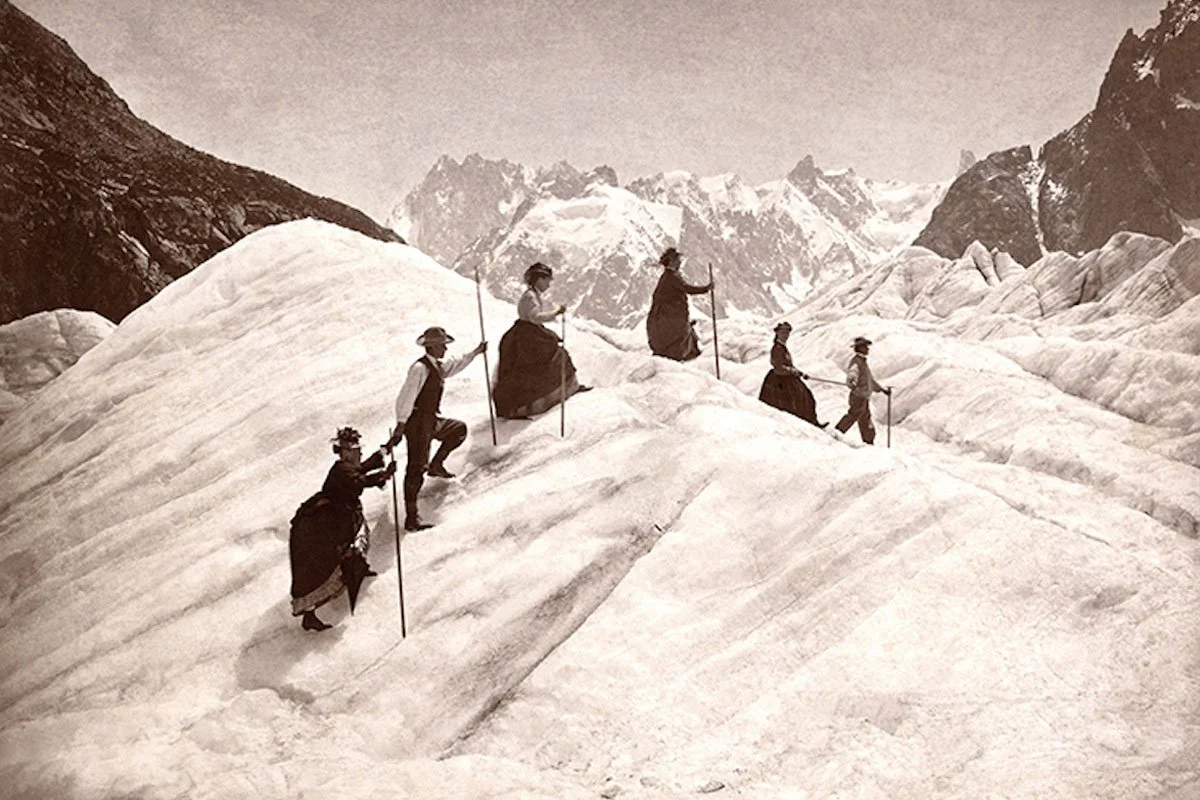
Ladies and guides on the Mer de Glace, Mont Blanc, F&G Charnaux, 1886 / The Arts Society
The rise of mountaineering in the late 18th and 19th centuries marked a real turning point. The first ascent of Mont Blanc in 1786 by Jacques Balmat and Michel-Gabriel Paccard is often seen as a milestone, not just for alpinism, but for footwear development as well. Their boots were simple leather designs reinforced with iron nails, which made it possible to cross ice and rock safely. Boots became even more specialised with the growth of popularity of alpinism in the 19th century. Alpine guides and climbers needed thick, one-piece leather uppers with very stiff soles, and metal or hobnailed traction. They were heavy and hard to break in, but but they laid the foundation for the hiking and mountaineering boots used today.
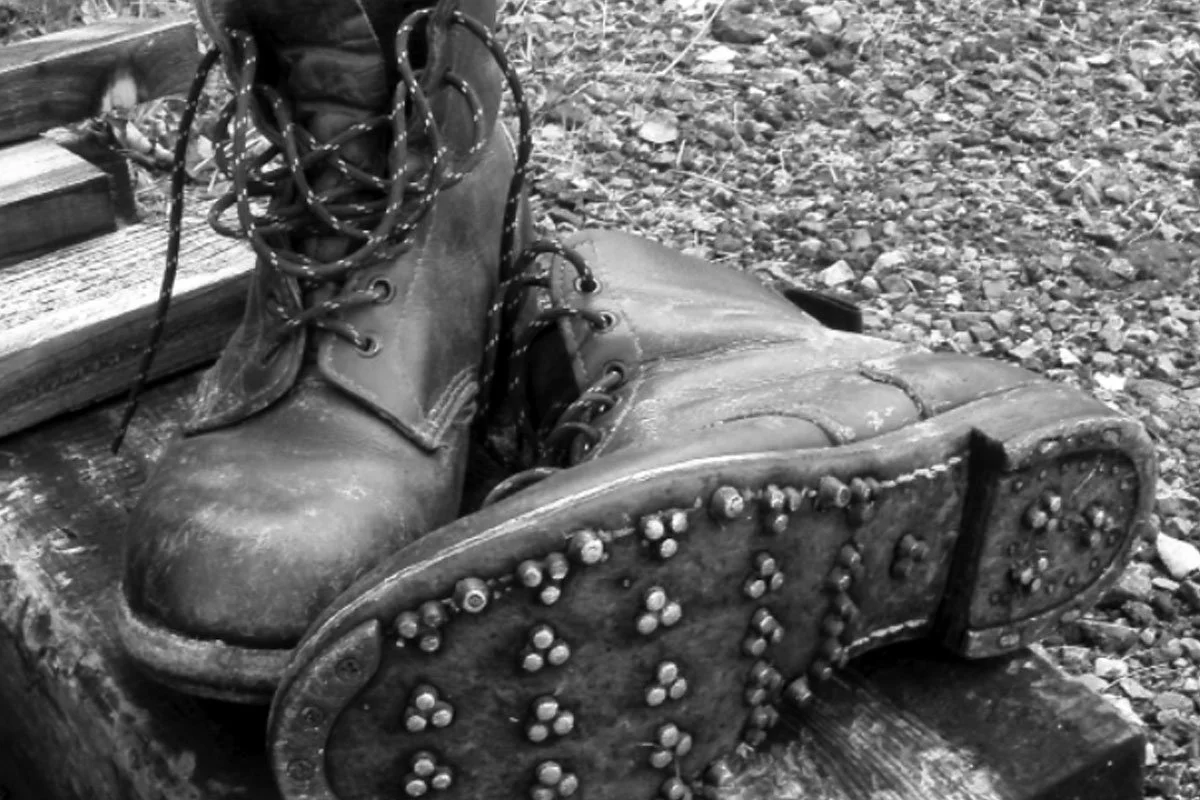
19th century hikig boots - the soles were heavy gauge double or triple leather, with iron plates to protect the heel and toe and a pattern of single and triple nails for additional traction / Stack Exchange
By the early 20th century, hiking boots started to separate from everyday footwear. Shoemakers and new outdoor brands began making boots specifically for trekking and mountain use. Rubber soles gradually replaced hobnails, which created better grip and made them more comfortable. Improvements like stronger toes, better lacing, and more ergonomic shape became standard.
A big breakthrough came in the 1930s with the Vibram rubber lug sole. After the tragic climbing incident in the Italian Alps in 1935, in which six climbers died due to a fall on wet and icy rock, Vitale Bramani wanted to create a sole that would have better grip on uneven surfaces. His design completely changed outdoor footwear and is still used as the standard for most soles today.
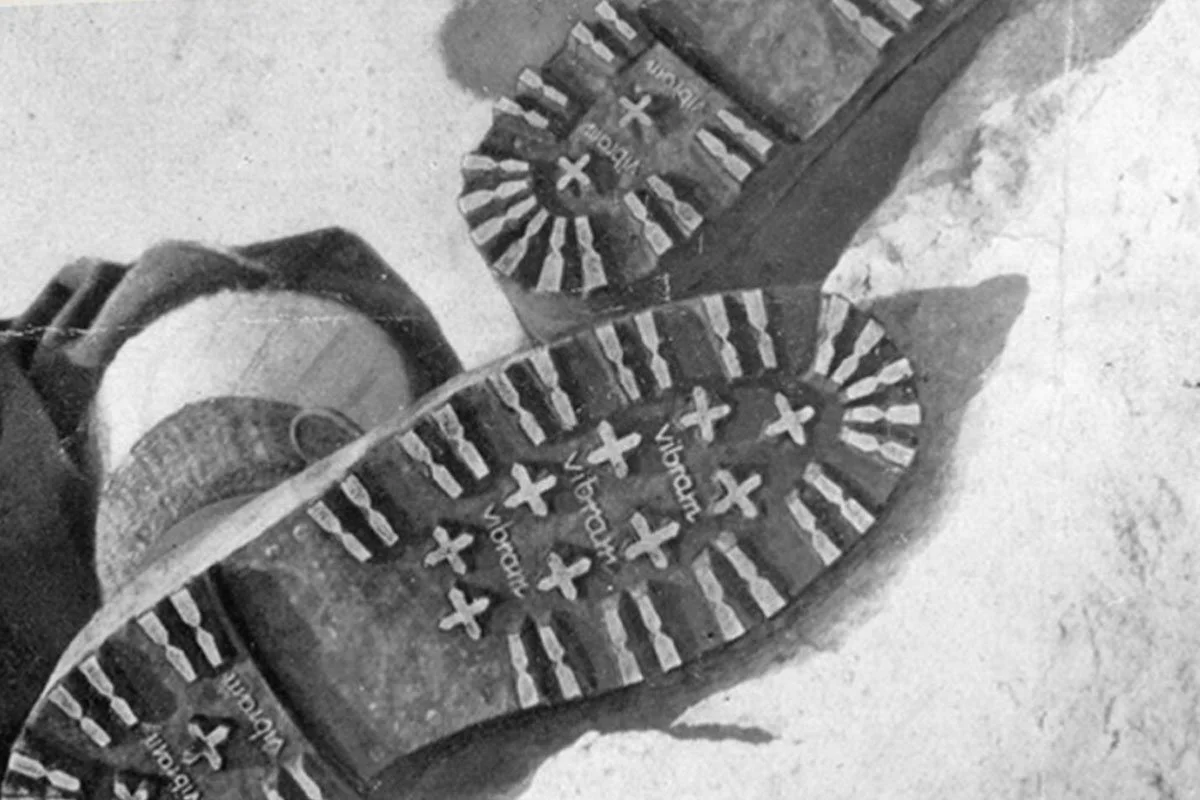
Vibram Carrarmato sole / Vibram
After World War II, advances in military boot technology pushed things even further. Better leather treatments, stronger soles, and mass production made hiking boots lighter, more comfortable, and easier to wear over long distances. This helped them reach a wide audience across Europe and the US.
From the 1970s, hiking boots started to change - EVA and polyurethane midsoles improved cushioning and shock absorption without adding extra weight. Synthetic panels made boots lighter, waterproof membranes like Gore-Tex kept water out. Designs were split into clear categories: heavy backpacking boots, lighter hiking boots, and eventually trail shoes.
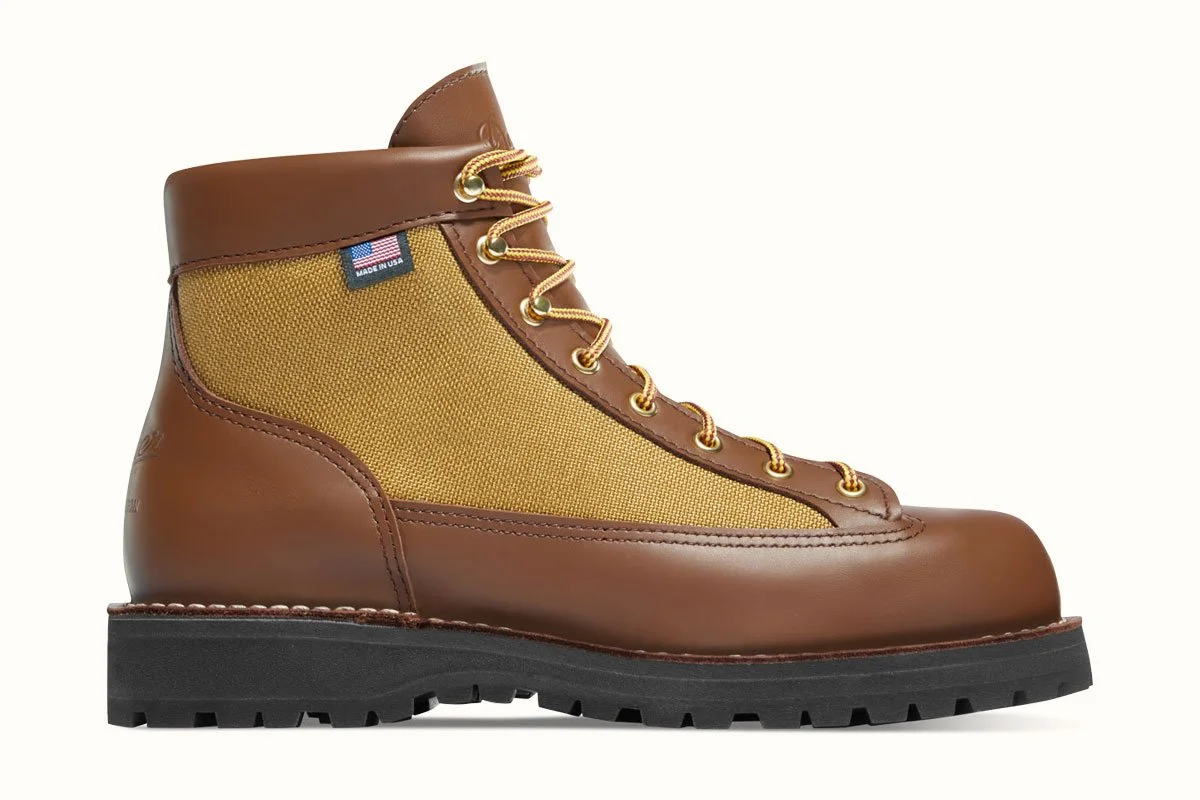
Today hikers can choose from many options, but most go for lightweight shoes or even trail runners. Traditional full-leather hiking boots are still highly respected in Europe for their durability, reliability, and long lifespan, but today they’re more often worn as a lifestyle shoe.
There are some differences between European and American hiking boots. European hiking boots developed primarily as professional tools. In Alpine regions such as Austria, Germany, Italy, and Switzerland, boots were made for guides, foresters, hunters, and shepherds who spent long days in steep terrain carrying weight. Stability and durability were more important than comfort, which is why traditional boots still focus on thick leather, stiff soles, and designs that allow repairs and resoling. These boots were designed to last decades.
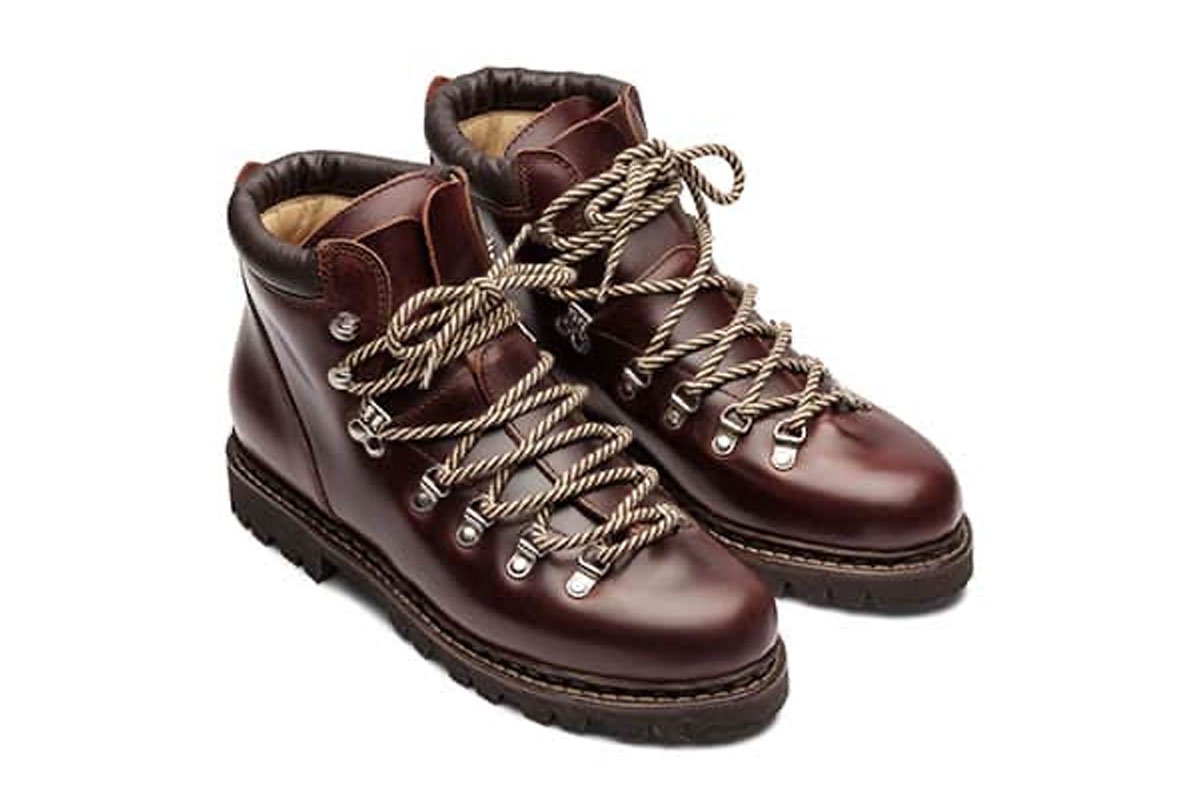
In contrast, American hiking boots evolved around recreation and distance. Shaped by vast national parks and long trails like the Appalachian and Pacific Crest Trails, so US brands prioritised comfort, lighter construction, and faster break-in. Synthetic materials and softer cushioning were adopted earlier, reflecting a culture that accepted footwear as something to be replaced rather than repaired. This approach ultimately led to the rise of modern lightweight hiking boots and trail running shoes.
In the US, the design of hiking boots also influenced workwear. Lugged soles, speed hooks, padded collars, and reinforced uppers moved from mountain boots into logging and construction footwear. Brands like Danner and Red Wing built their identities on this overlap between outdoor performance and work utility. And they are still very popular among classic workwear enthusiasts, who appreciate craftsmanship, heritage and functional design.
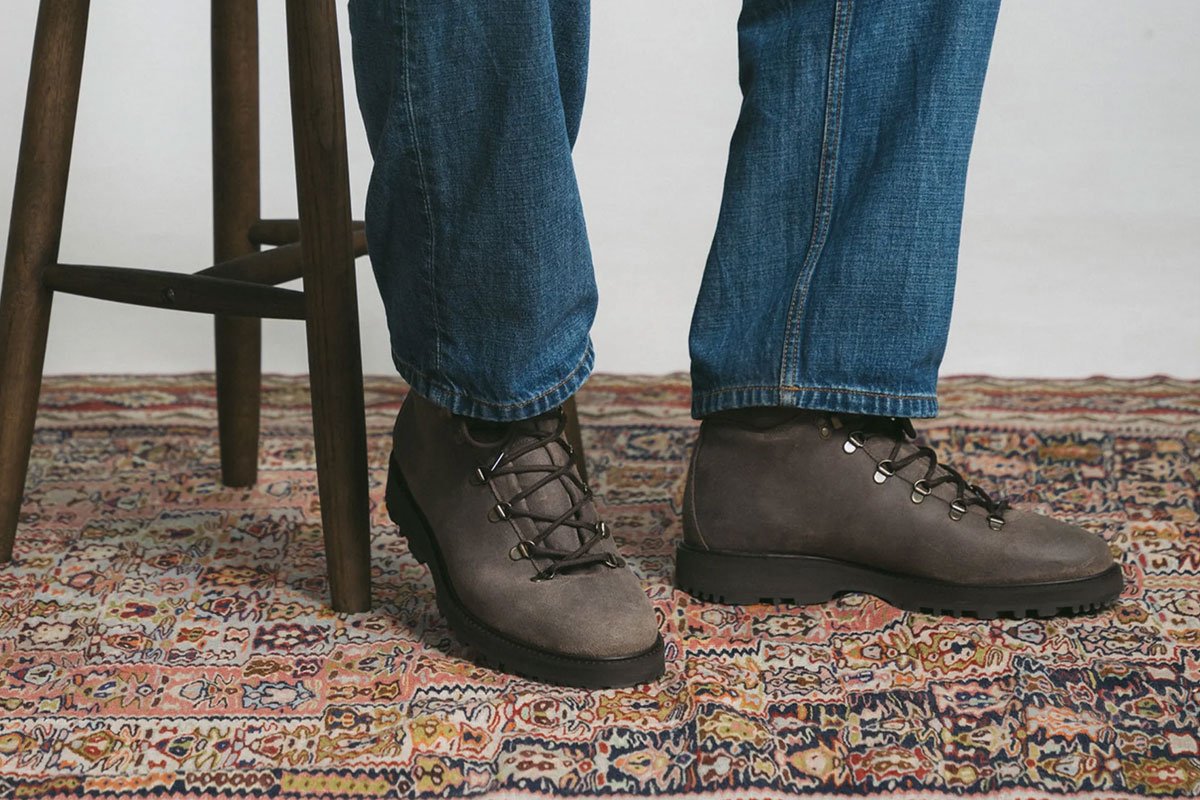
I will not continue with modern hiking and trail shoes, but will end with this: Hiking boots started as survival tools, evolved into specialised equipment for extreme environments, but today they are mostly worn for style. Their core however remains the same - to protect the foot and provide comfort, it doesn’t matter if on a mountain trail or a short walk to the nearest coffee shop.
For anyone who loves classic hiking boots, here’s my list of the best quality options.
related articles

The story of Chelsea boots, from their invention in Victorian England to their role in British style and culture. Nearly two centuries later, they remain one of the most timeless and versatile boots a man can own.