
Barbour Colour Guide: The Differences Between Classic Olive, Sage, Archive Olive, Bark, Rustic & Navy
Barbour's waxed jackets have been a part of British country clothing for generations, and partly because of their practical, iconic design and classic waxed cotton colours, they have become a staple of classic style. But today you will probably see more of them worn in the city than in the countryside.
The Bedale was introduced in 1980 as a shorter, lightweight jacket designed for riding, and the Beaufort followed in 1983 as a longer jacket designed for shooting and other outdoor activities. Both were designed by Dame Margaret Barbour and have since become two of the most recognisable Barbour jackets.
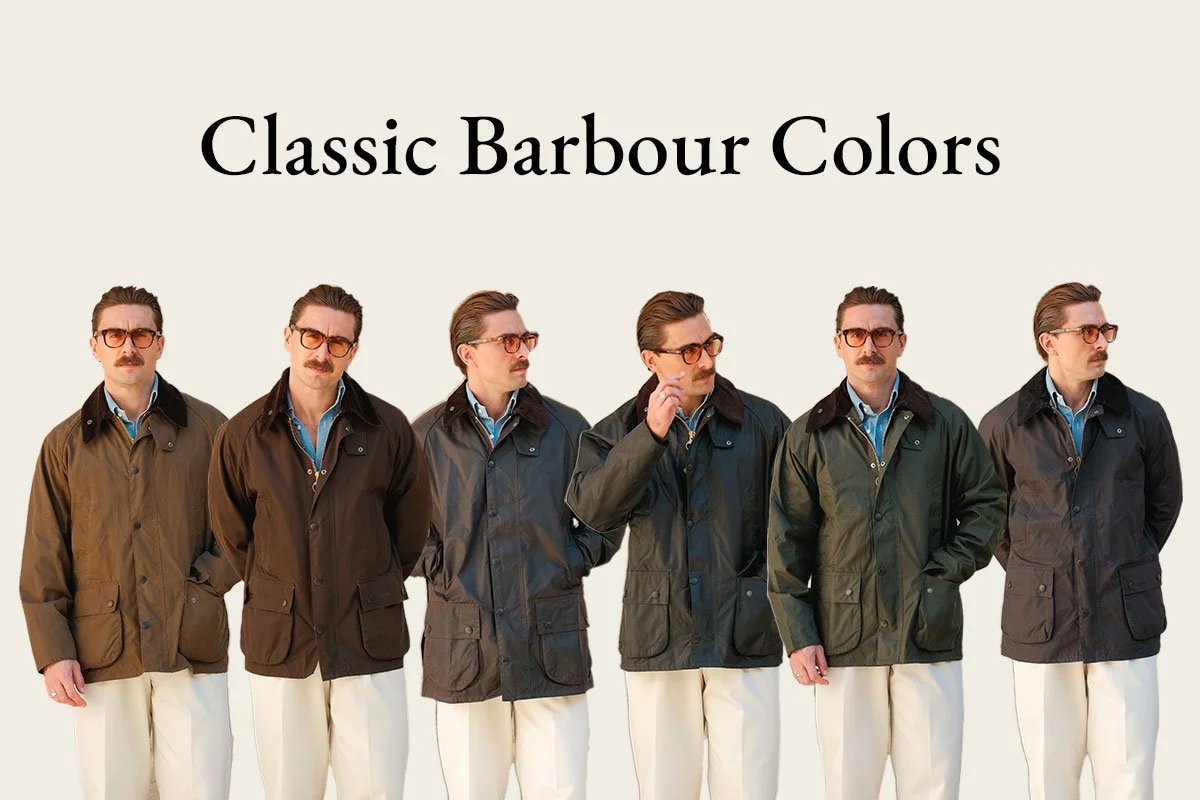
Today, one of the biggest problems when choosing a Barbour online is that the same colour can look completely different from one photograph to another. Even in person, it can sometimes be difficult to tell the difference between all the colours. Waxed cotton reflects light differently depending on the angle and lighting, so a jacket photographed indoors can look much darker than the same jacket in natural daylight. The wax itself also affects how the colour appears, and years of wear can make an older jacket look very different from a new one. As the waxed cotton develops a patina, areas that receive more friction become lighter, shinier and more varied in colour.
This is particularly important with Sage, Rustic and Archive Olive, which can look surprisingly similar in certain photographs even though they are quite different colours in person. Rustic can also look much closer to Olive or Sage than you might expect when photographed in shadow.
For that reason, side-by-side comparisons in natural light are much more useful than looking at separate product photographs. In this guide, I'll compare the colours directly and explain what you can expect to see in different lighting and as the jackets develop with wear.
Barbour colours: a quick comparison
Classic Olive — despite the name, it is actually a dark brown with a subtle olive undertone.
Archive Olive — a dark, earthy olive green, similar to a traditional hunting olive.
Sage — a very dark, cool olive green with a noticeable blue/grey undertone. Much cooler than Archive Olive.
Rustic — a very dark, warm brown with a distinct red undertone.
Bark — a light, warm brown.
Navy — very dark, deep navy blue. So dark that it can appear almost black in shade or low light.
Classic Olive
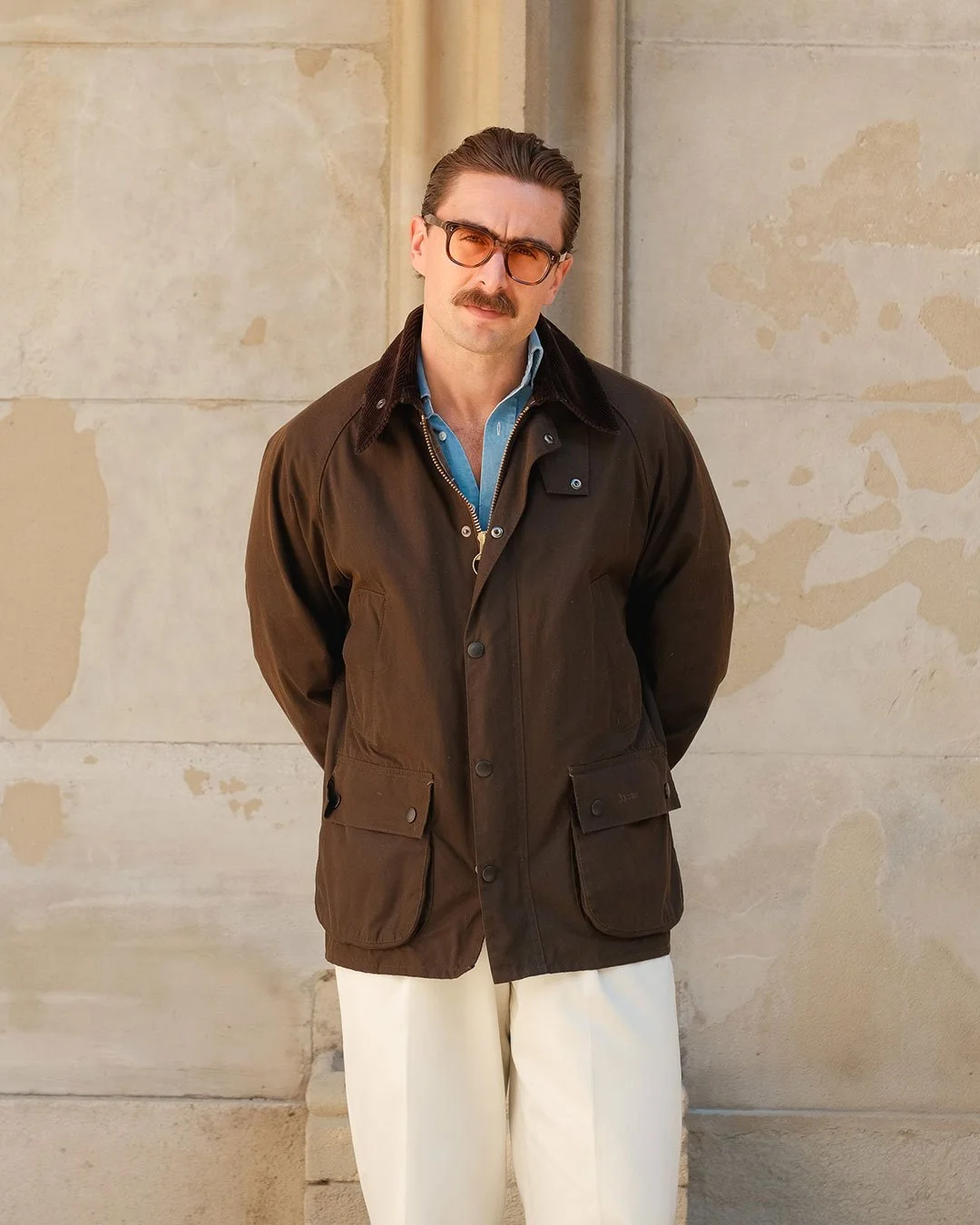
By Classic Olive, I mean the Olive colour used on Barbour's Classic Bedale and Classic Beaufort. Despite the name, this colour is much more brown than many people expect.
In certain light, it can look almost brown, with only a subtle olive undertone. It is a warm, earthy colour with a distinctly different appearance from the greener Archive Olive.
Both the Classic Bedale and Classic Beaufort in Olive are made from Barbour's 6oz Sylkoil waxed cotton, so the fabric itself is part of what gives Classic Olive its look. Sylkoil has a softer, less glossy appearance than some of Barbour's other waxed finishes, which contributes to the particularly muted and slightly brown character of Classic Olive.
So the difference with Archive Olive isn't only the colour, but also the fabric, as the two jackets use different waxed cotton finishes. This is one reason why the two Olives can look so different in person. But when comparing just the colours, Archive Olive is much greener, while Classic Olive is almost brown.
So if you want a Barbour that feels brown and earthy rather than obviously green, the answer is Classic Olive.
Archive Olive
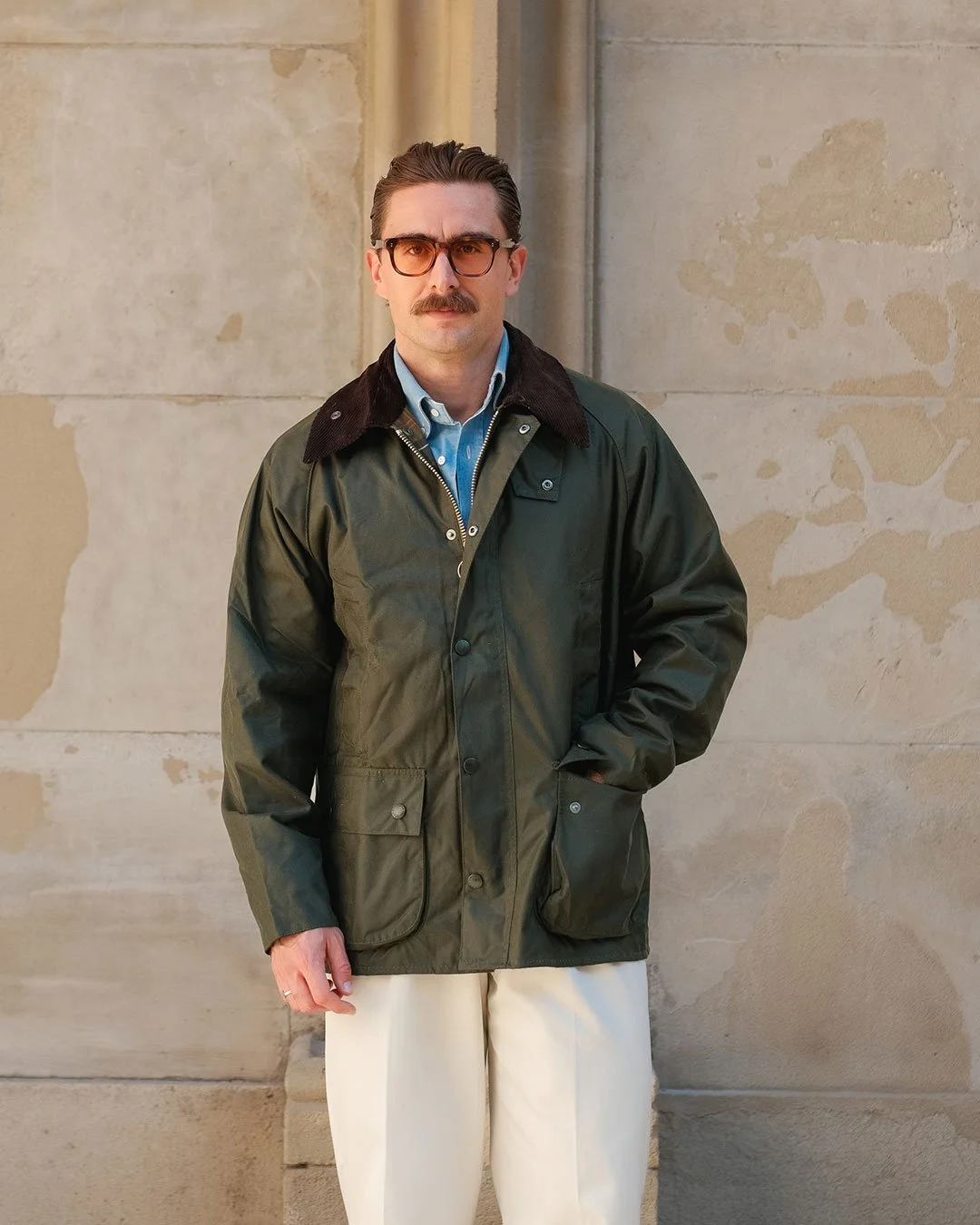
Archive Olive is considerably greener. It is best described as a dark, earthy olive green. Compared with Classic Olive, it has much less brown in it and looks closer to what most people would imagine when they hear the word "olive".
Barbour currently offers both the Beaufort and the Bedale in Archive Olive.
So if you want a Barbour that feels distinctly olive green rather than brown, the answer is Archive Olive.
Classic Olive vs Archive Olive: the conclusion
Classic Olive = browner.
Archive Olive = greener.
Sage
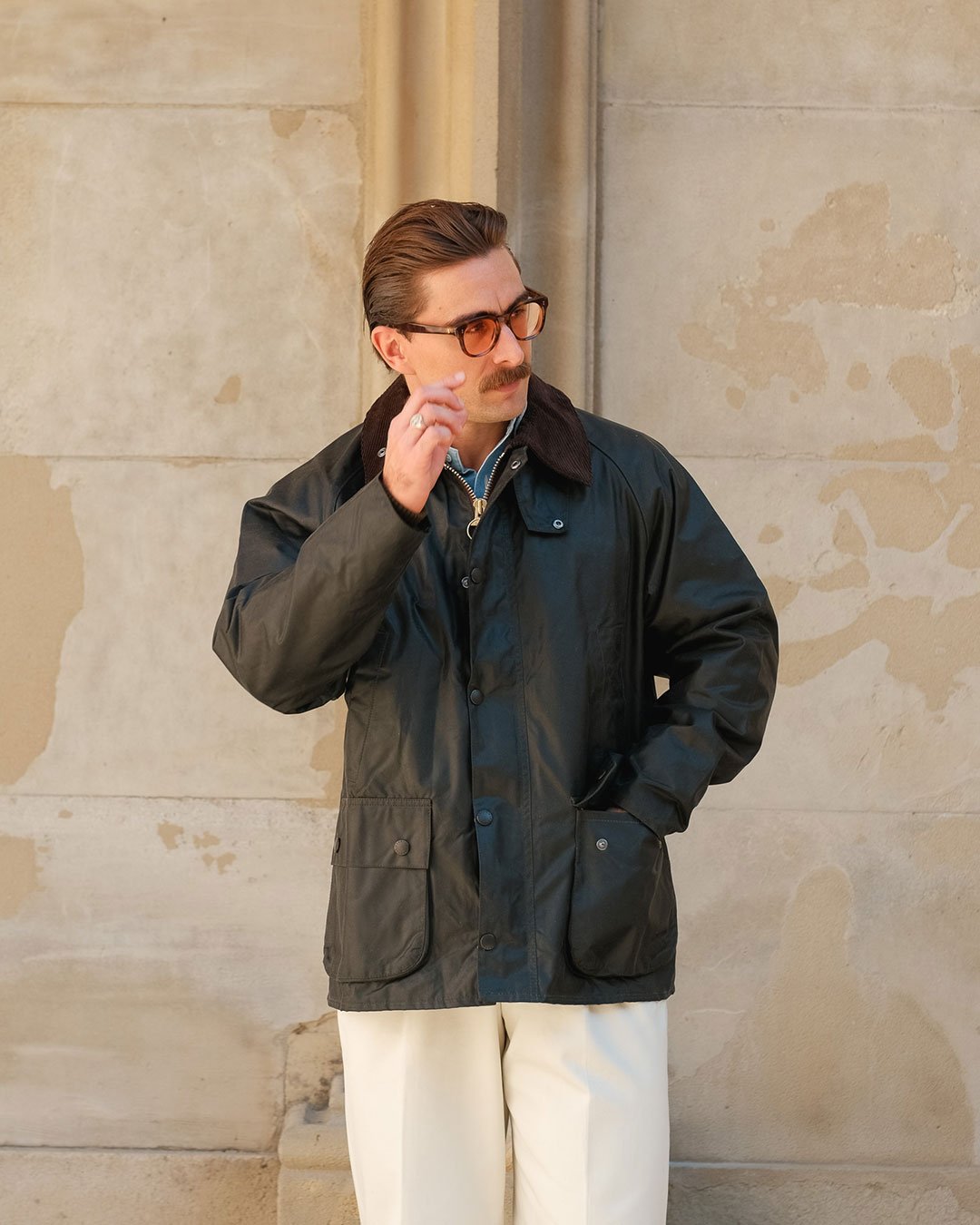
Barbour's Sage is a dark, muted green. It is not a bright green and it is not the same as Olive. Depending on the lighting, a new Sage jacket can look extremely dark, sometimes almost black, while natural daylight brings out its green character.
Sage is probably also the most classic of all Barbour's green colours. When the Bedale was introduced in 1980, it was available in Sage and Navy, making Sage one of the original Bedale colours. The Beaufort followed in 1983 and Sage has remained one of its defining colours ever since. This is why Sage is probably the colour most people have in mind when they think of a classic green Barbour jacket.
There is one important thing to keep in mind when looking at vintage Barbours, though. Older Sage jackets often look much greener and lighter than a new one. Years of wear, fading and changes in the wax can give the fabric a more visible green, sometimes almost forest-green appearance. A new Sage jacket, especially before it has been worn in, is much darker and can look almost black in low light.
So if you want the colour most people picture when they think of a classic green Barbour jacket, Sage is the answer, but don't be surprised if a new Sage looks considerably darker than the vintage Barbours you see in photographs.
Sage vs Archive Olive
Sage is darker, cooler and more traditionally associated with Barbour, while Archive Olive is warmer, earthier and more distinctly olive. If you want the traditional Barbour green, choose Sage. If you prefer a more earthy, vintage and rugged look, choose Archive Olive.
Classic Olive vs Sage
The easiest way to distinguish Classic Olive and Sage is by their colour temperature. Classic Olive is warmer and much browner, while Sage is darker, cooler and clearly green.
Rustic
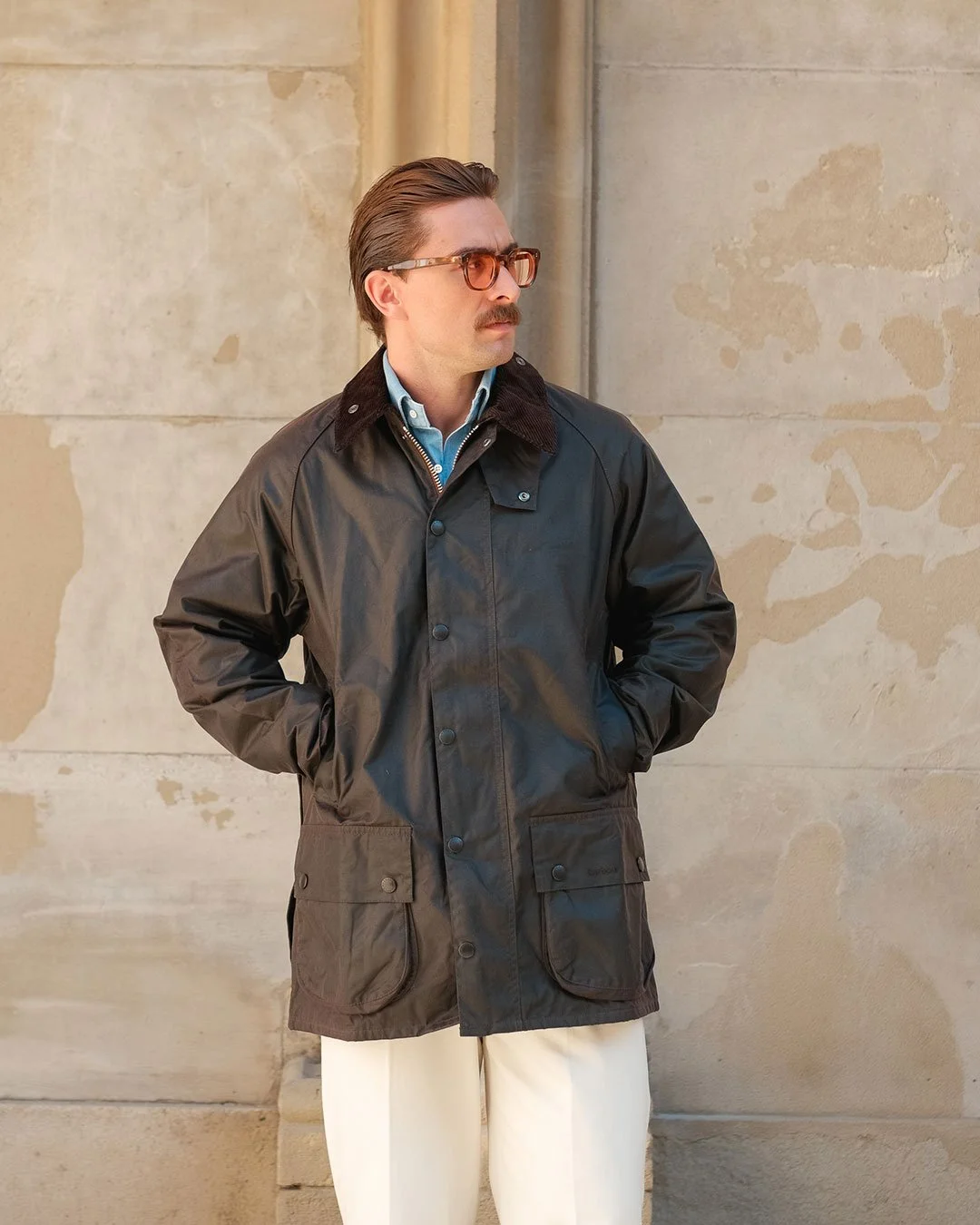
Rustic is a very dark brown, with a deep chocolate-brown base and warm, reddish undertones. When the jacket is new and heavily waxed, it can look almost black in low light, which is one reason Rustic is surprisingly difficult to judge from photographs.
In natural daylight, the brown becomes much more obvious. As the wax wears and the jacket develops its patina, Rustic can become warmer and more reddish, with much more variation in colour than you might expect from a new jacket.
This is also why Rustic can look surprisingly close to Olive or Sage in shadow, even though the three colours are quite different in daylight, where you can see that Rustic is brown with a reddish undertone, Classic Olive is a much more earthy brown, and Sage is clearly green.
So if you want a Barbour that starts out very dark but develops a warmer, more reddish brown with wear, Rustic is one of the most interesting colours in the selection.
Bark
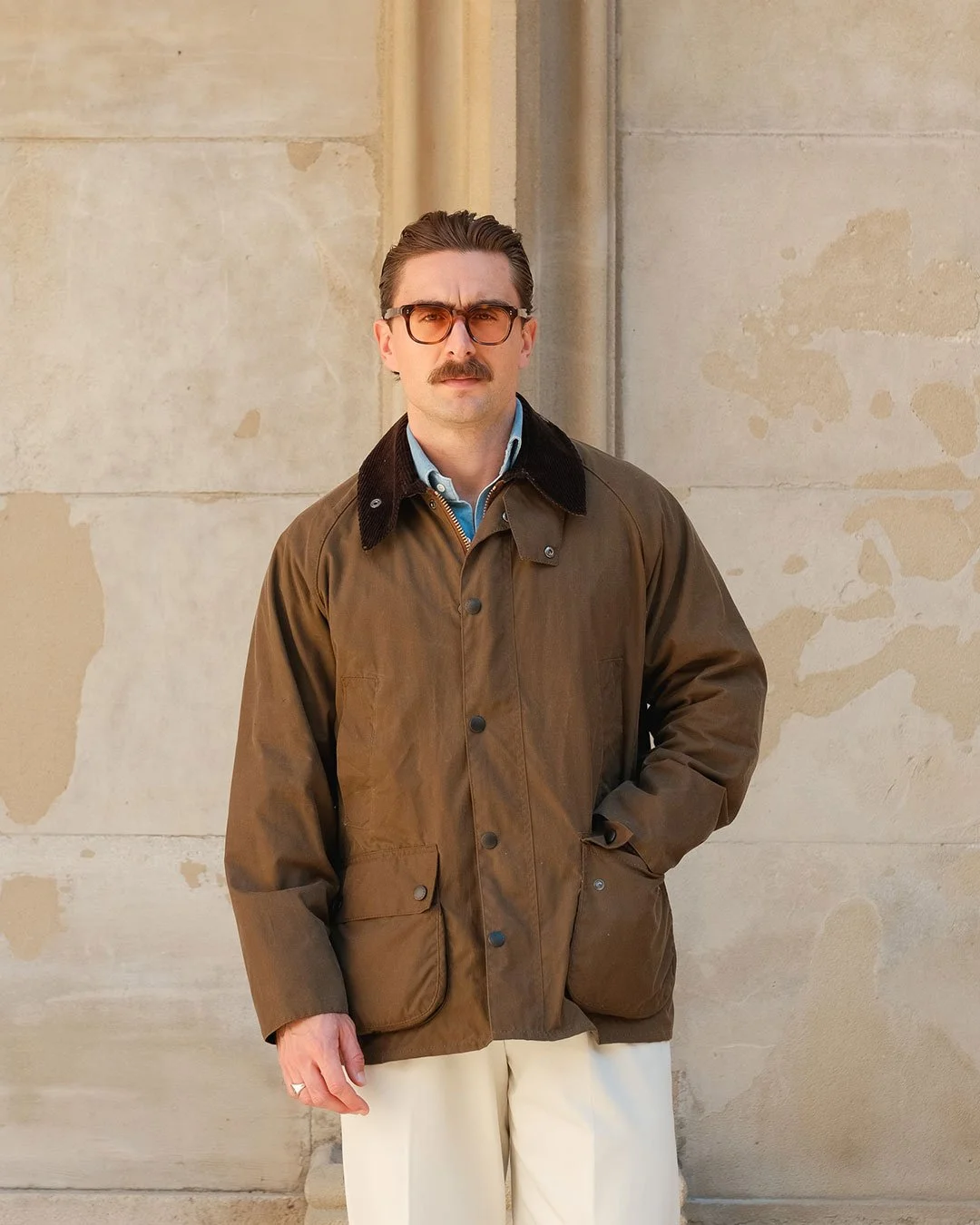
Bark is a light, warm brown with a soft, earthy appearance. The colour is immediately recognisable, even in low light, and is noticeably lighter than Classic Olive, which is the other Barbour colour with a strong brown character.
If you want a Barbour in a straightforward, warm brown, Bark is the easiest colour to recognise.
Navy
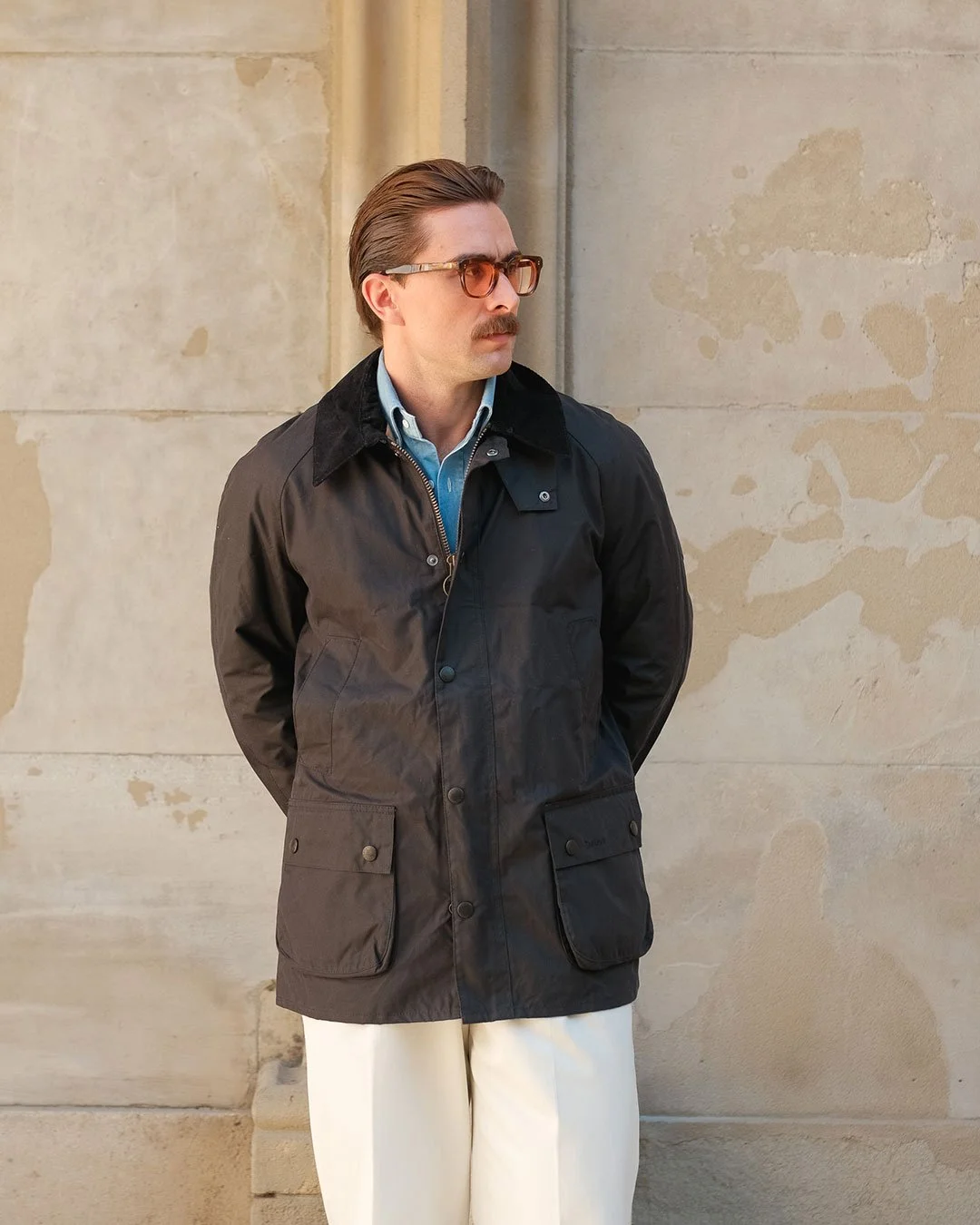
Navy is a deep, dark blue and the least earthy of the Barbour colours in this guide. It can look almost black in low light, but in daylight the blue becomes much more apparent.
It gives you the classic Barbour waxed-jacket look without the green or brown tones of the other colours, making it a good option if you want to avoid the typical countryside aesthetic.
It is particularly easy to combine with grey, cream, denim, brown leather and other classic menswear colours. If you want something understated and versatile without choosing green or brown, Navy is an easy choice.
Which Barbour color should you buy?
Choose Classic Olive if:
You want a brown, earthy colour with a subtle olive undertone
You don't want a conventional green Barbour
You prefer warm, muted colours
You want a colour that works particularly well with brown leather and other earth tones
Choose Archive Olive if:
You want a distinctly olive green
You like earthy, vintage and rugged colours
You want something noticeably greener than Classic Olive
You prefer a more unusual alternative to the traditional Sage
Choose Sage if:
You want the quintessential Barbour colour
You want a classic, dark green
You like the traditional Barbour look
You want a colour that works equally well with country clothing and everyday casual clothes
Choose Rustic if:
You want a very dark brown
You like brown with a warm, reddish undertone
You want a colour that can look surprisingly close to Olive or Sage in shadow
You like the idea of a colour that becomes warmer and more reddish as it develops a patina
Choose Bark if:
You prefer brown over green
You want a light, warm brown
You like soft, earthy colours
You want a Barbour colour that is immediately recognisable as brown
Choose Navy if:
You prefer blue over green or brown
You want a deep, understated colour
You want to avoid the typical countryside aesthetic
You want a colour that is easy to combine with both casual and smarter clothing
Which Barbour colour is the most versatile?
If versatility is your priority, I would narrow the choice down to Sage, Archive Olive and Classic Olive.
Sage works with almost any classic menswear wardrobe, but its strong country associations make it feel more traditional.
Classic Olive is particularly easy to wear with brown, tan, cream and other earth tones.
Archive Olive is probably the most versatile of the three overall, as its balance of green and earthy tones works with everything from earth tones to blues, navy and greys.
Hopefully this guide makes choosing between the colours a little easier. And now that you understand all the differences, which Barbour colour is your favourite, or which one would you choose next?
Or if you're not sure which model to choose, you can find a more detailed comparison of the Bedale, Beaufort and Ashby in this article.
*I’m 180cm tall, weigh 83kg, and on the photos I’m wearing size 40 in the Bedale and Beaufort, and size L in the Ashby.
related articles

Gallet Watches returns after 200 years with a new collection inspired by its historic models. Take a look inside the Vienna launch event and get a closer look at the new watches from the revived Swiss brand.