
Fatigue Pants: From Military Uniform to Menswear Classic - The History of OG-107
If you are a part of the menswear bubble, you probably know what fatigue pants are. Signature olive colour, two large square pockets on the front, patch pockets at the back, a straight-leg cut, and a fabric that somehow manages to look as good with a pair of sneakers and a sweatshirt as it does with a navy blazer and loafers.
The fatigue pants we know today are largely based on the U.S. Army OG-107 utility trousers, introduced in 1952. The name OG-107 refers to the Olive Green colour of the uniform, and 107 is the Army’s designation for this specific olive-green shade. The trousers were made from 8.5 oz. cotton sateen and designed as practical work clothing for soldiers performing maintenance, training and other physically demanding tasks, rather than primarily for combat. So the design was deliberately simple: two large patch pockets at the front, two at the back and a relatively relaxed, straight-leg cut.
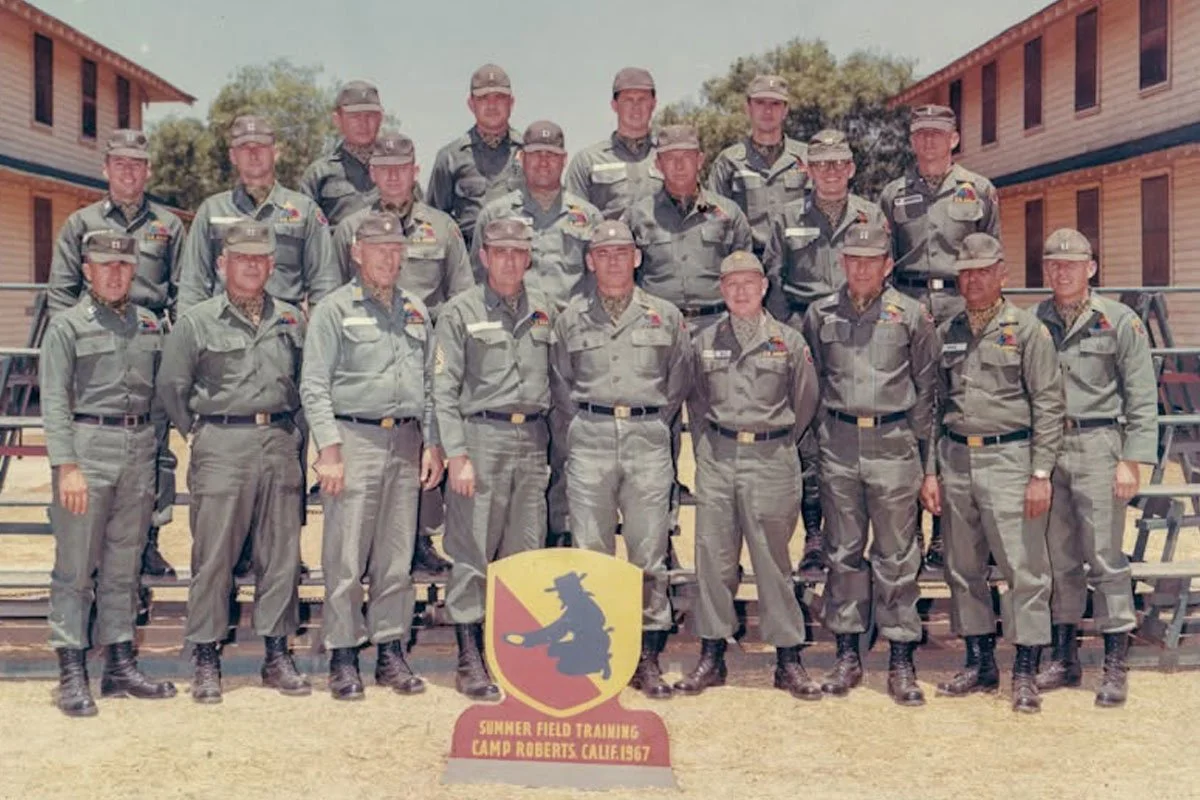
Officers of the 3rd Battalion, 149th Armor Regiment during their 1967 Annual Training, wearing full OG-107 uniforms. Photo from the 149th Armor Regimental Collection, via the California Military Department State Military History & Museums Program.
The OG-107 evolved from earlier U.S. military utility trousers, particularly the HBT trousers used during the Second World War. The new cotton sateen was lighter than HBT but offered the durability required by the Army. And even though they were officially part of the Utility Uniform, soldiers called them fatigues.
The OG-107 trousers remained in use for decades, with a few changes over the years. The most important one came in 1964, when the trousers changed from generic small, medium and large sizing to actual waist and inseam measurements, such as 32 × 30. At the same time, the adjustable waist tabs were removed. The overall design remained largely unchanged until the 1970s, when the Army introduced the OG-507, which looks very similar to the OG-107 but is made from a 50/50 cotton-polyester blend instead of 100% cotton. The later trousers can also be identified by their zipper fly and often, a bright yellow care tag sewn inside.
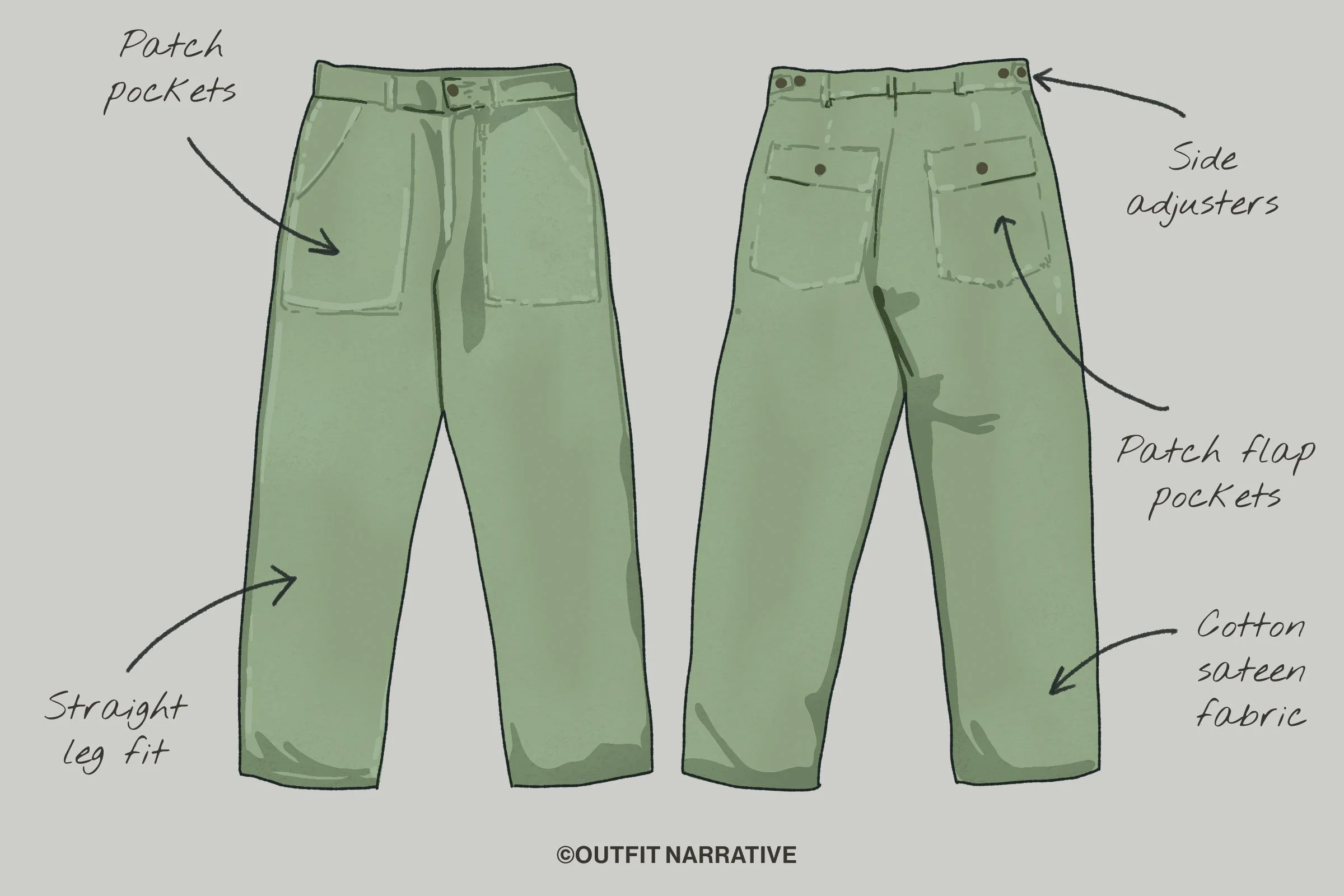
OG-107 design features
As with many pieces of military clothing, the story became more interesting when the trousers left the military. After they were phased out, millions of OG-107s began circulating through surplus stores across the United States and other countries influenced by American military culture. They were cheap, but they were also comfortable, durable and very practical.
The straight-leg cut gave you plenty of room to move, while the large patch pockets provided plenty of useful storage. This made them an easy choice for farmers, workers and artisans, who could use them for the kind of physical work they had originally been designed for. It also explains why they became popular with people outside of traditional workwear. Early generations of climbers and hikers, and later skaters and other active groups, appreciated the freedom of movement, sturdy fabric and practical pockets.
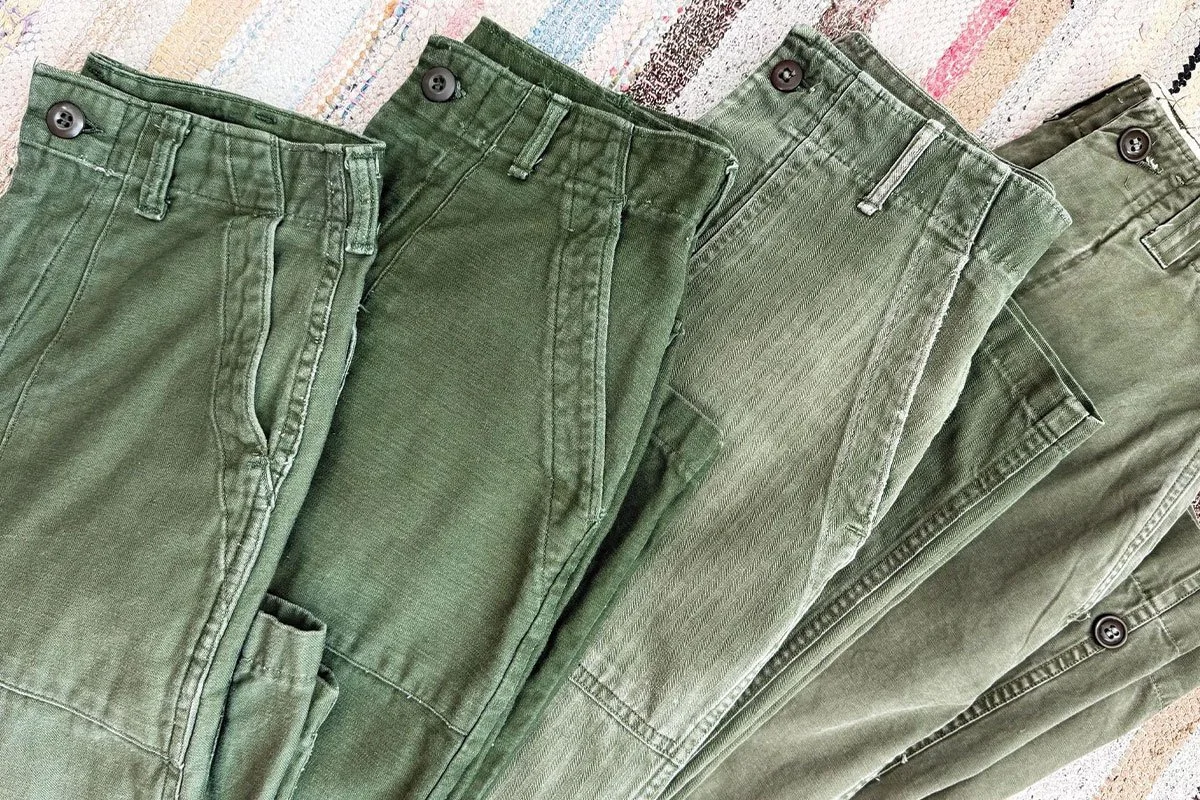
Vintage 1960s OG 107 Military Army Fatigue Pants
Then, during the 1960s and 1970s, fatigue pants started appearing in a very different context. They became part of the clothing worn by the counterculture and anti-war movement. During the Vietnam War, veterans protesting against the conflict would sometimes wear their old uniforms to demonstrations. The Vietnam Veterans Against the War (VVAW) in particular wore military clothing at protests, turning something that had represented military service into a symbol of opposition to the war, authority and the establishment.
From there, the trousers continued to move between different groups. They became part of the unofficial uniform of various countercultures, from hippies to punks and skinheads, while their practical design continued to make them useful for climbers, skaters and other active groups.
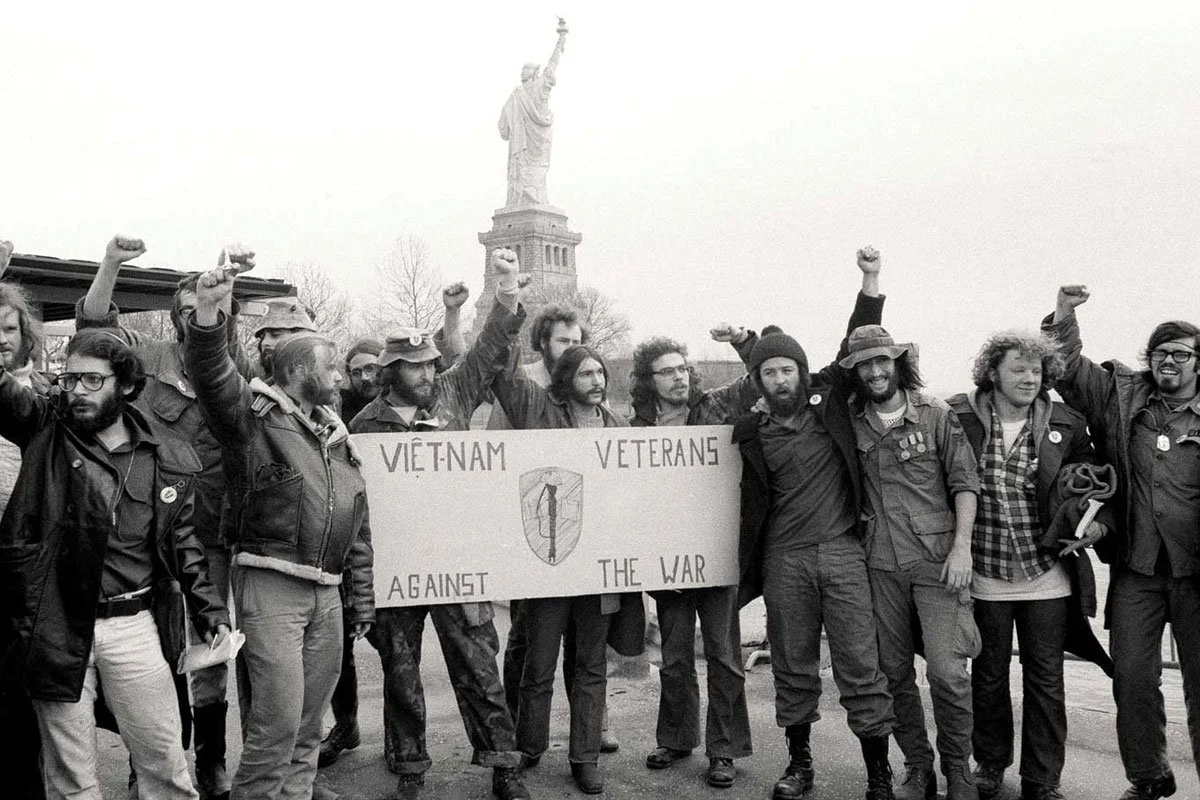
Vietnam Veterans Against the War (Anthony Camerano / AP)
If you've looked at Japanese menswear brands, you may have noticed they sometimes call them baker pants. It is one of those mysterious clothing terms that sounds as though it must have an obvious historical explanation, but it doesn't really. The term appears to have emerged in Japanese fashion and workwear circles and is now commonly used for trousers based on the OG-107 design. There are various theories about where the name came from, but there doesn't seem to be a definitive answer. That’s why you see brands using fatigue pants, OG-107 pants, utility pants, baker pants or military fatigues to describe garments that are essentially a variation of the OG-107s.
The original OG-107s are still quite easy to find on eBay or Vinted, but the prices for originals are much higher today. You can still get lucky finding a great deal if you are searching at local thrift or second-hand shops, while specialised vintage shops know what they are and price them accordingly. But if you don't want to play this hunting game, there are plenty of quality options available today, from exact military reproductions to more refined versions with heavier fabrics, tweaked construction and more contemporary fits. I've put together a guide to the best quality fatigue pants available today, including the pairs I think are most worth considering if you want to add this versatile piece of military history to your wardrobe.
If you’re looking to add a pair to your wardrobe, I’ve also put together a guide to the best quality fatigue pants available today.
related articles
From the U.S. Army’s OG-107 utility trousers to their evolution into a menswear classic, here’s what OG-107 means, how fatigue pants became popular, and why they remain a wardrobe staple today.