
Titan Eternity Aluminium Suitcase Review: A Made in Germany Rimowa Alternative
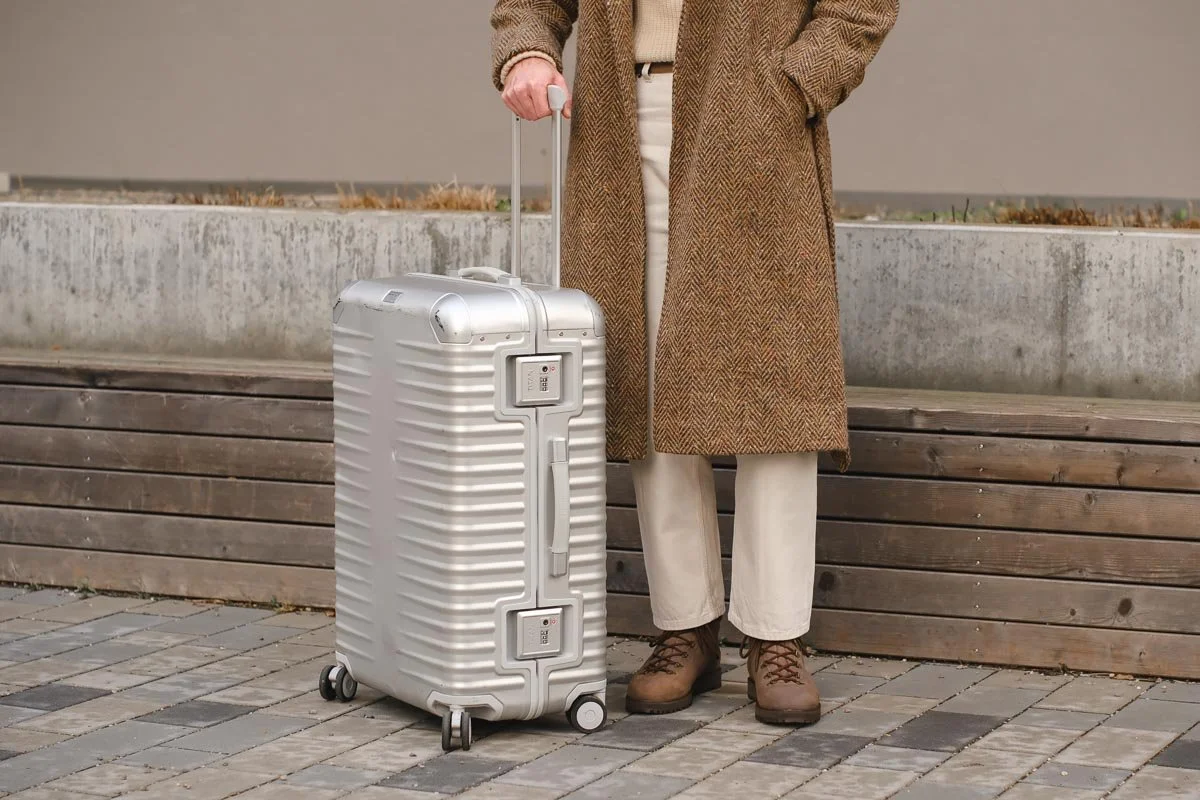
I have been searching for a new aluminium suitcase made in the EU, USA or Japan since Rimowa was acquired by LVMH. And for quite some time the only option available was FPM Milano, which I unfortunately (or luckily?) haven’t had the chance to see in person yet, but I have to admit I was very close to ordering it multiple times.
It seems that my wait has paid off, because last September the German brand Titan released their version of an aluminium suitcase at a very attractive price - almost half of what FPM Milano or Rimowa cost. Of course, price is not the only reason why it got my attention, because I already own their Litron polycarbonate cabin-size suitcase and I’m very happy with how it performs and how it has held up. I think their suitcases are among the best in terms of quality and value, and I also prefer them over many other options in today’s very saturated luggage market, because they are one of the very few options still made locally. To be more precise, they have their own production in Germany, and as you already know, I would always support smaller brands with their own production over big companies or corporations, which is also one of the main reasons that I’m avoiding Rimowa since they are under LVMH.
Since I already have very good experience with the brand, I had no doubts about the quality, and I also wanted to see what being almost half the price could mean in terms of quality and value. I needed a bigger check-in suitcase, so I decided to get it.
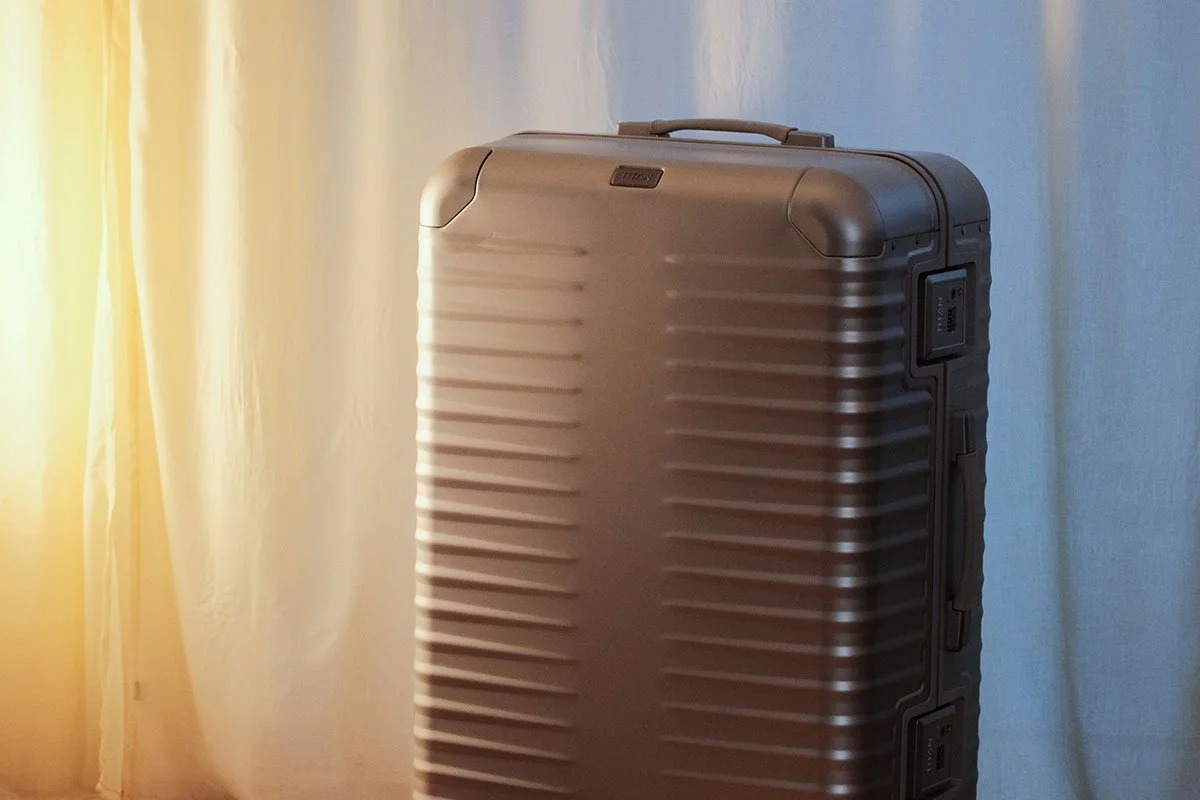
Photo of the suitcase when I first got it - it hasn’t got any scratches yet.
The Eternity Aluminium Suitcase comes in 3 sizes: S (40 x 55 x 23 cm – 45 liters – weighs 4.7 kg – price: €599.95), M+ (40 x 55 x 23 cm – 81 liters – weighs 5.9 kg – price: €649.95), and L (53 x 75 x 30 cm – 101 liters – weighs 6.7 kg – price: €699.95).
The design is similar to the Rimowa Original or Classic aluminium suitcase, in terms that a big block of 100% aluminium is folded into a shell to get the base shape of one side of the suitcase, and then other elements are added to that shape to provide more structure. The top four corners are covered with folded aluminium “caps”, and basically the whole outside is covered with aluminium, except the bottom four corners, which are plastic because that’s how the wheels are attached. The telescopic handle is also plastic, and the carrying handle is made from genuine leather.
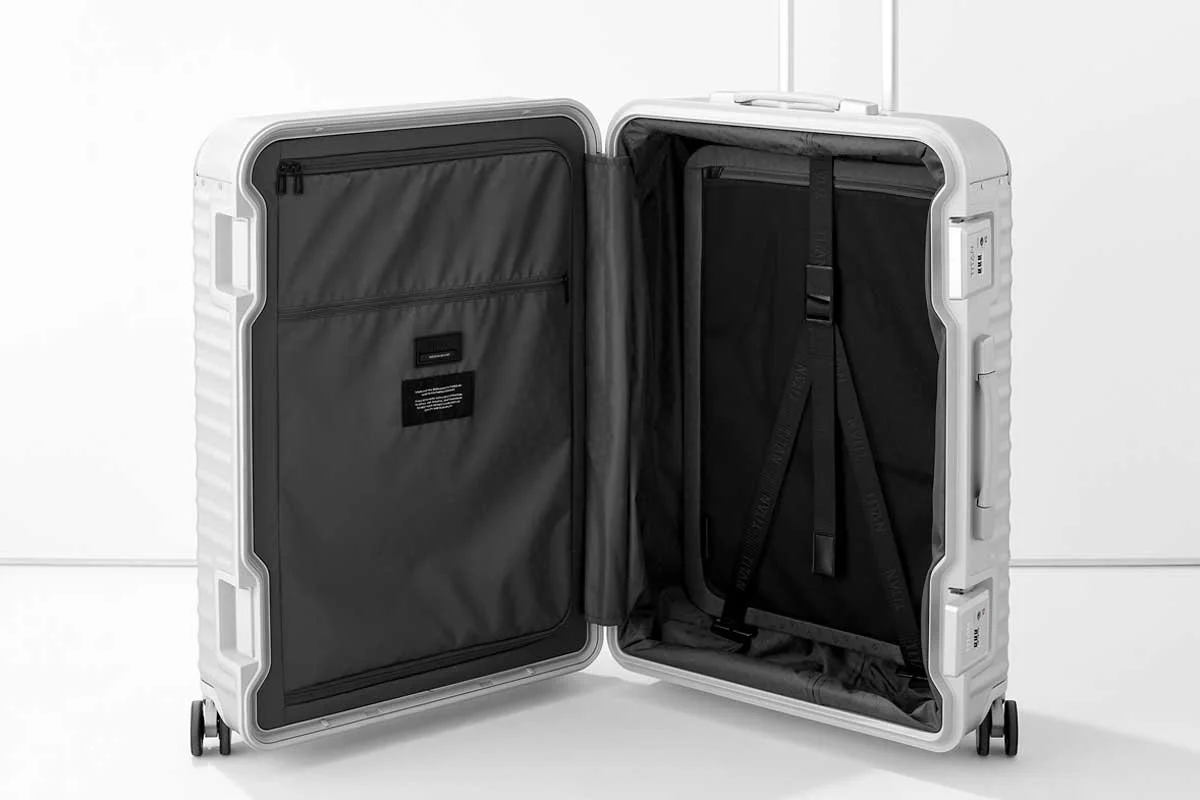
Inside of the suitcase - one side closes with a zipper, while the other side doesn’t fully close, but comes with a “lid” and adjustable straps
The TSA locks are also made from aluminium, and they act as handles to open the suitcase. The overall design is very clean and minimalistic - the suitcase looks great and definitely has a very premium feel.
The inside of the case is lined with recycled polyester with a high-quality jacquard weave, and it is very simple - each side of the suitcase is just one big space, like most suitcases. One side closes with a zipper, while the other side doesn’t fully close, but comes with a “lid” that you put on top of your packed items and then strap over so it holds everything in place. If I’m completely honest, I don’t understand why they chose to do it like this. Most of their other suitcases have both sides designed to close with a zipper, with one side usually also having two extra zippered pockets on top of that, which I think is much more practical. But still, this isn’t really something that in any way affects the experience with the suitcase.
Another thing about Titan bags is that they roll extremely smoothly. Truth be told, I did not expect that when I bought my first polycarbonate suitcase from them a couple of years ago - back then I paid around 160€ for a size S at a great discount, so I was really surprised by the build and overall quality and how well and smoothly it rolls - and it still rolls as it did on the first day.
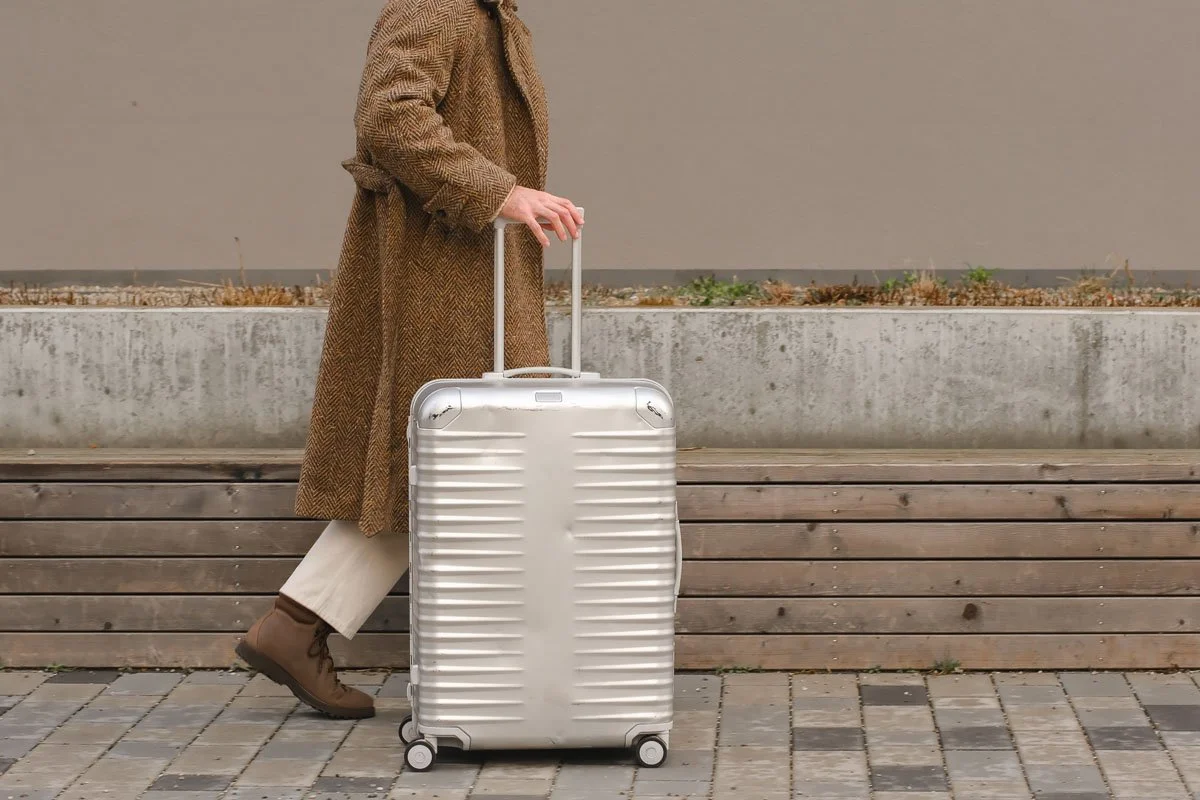
The suitcase rolls very smooth.
So with this one I expected the same experience, but I have to say that it might roll even slightly smoother. But this could also be because it is much bigger and heavier when full (I got the aluminium version in size Large, which is 53 x 75 x 30 cm and 101 liters, vs. my check-in polycarbonate version, which is 40 x 55 x 23 cm and 44 liters).
One of the main characteristics of aluminium suitcases is that they should hold up better, last much longer, and only get better with time after getting more scratches and dents from usage. But still, I have to admit that I wasn’t too excited when I had to check it in for the first time, knowing that I would never see it in that perfectly smooth and shiny condition again.
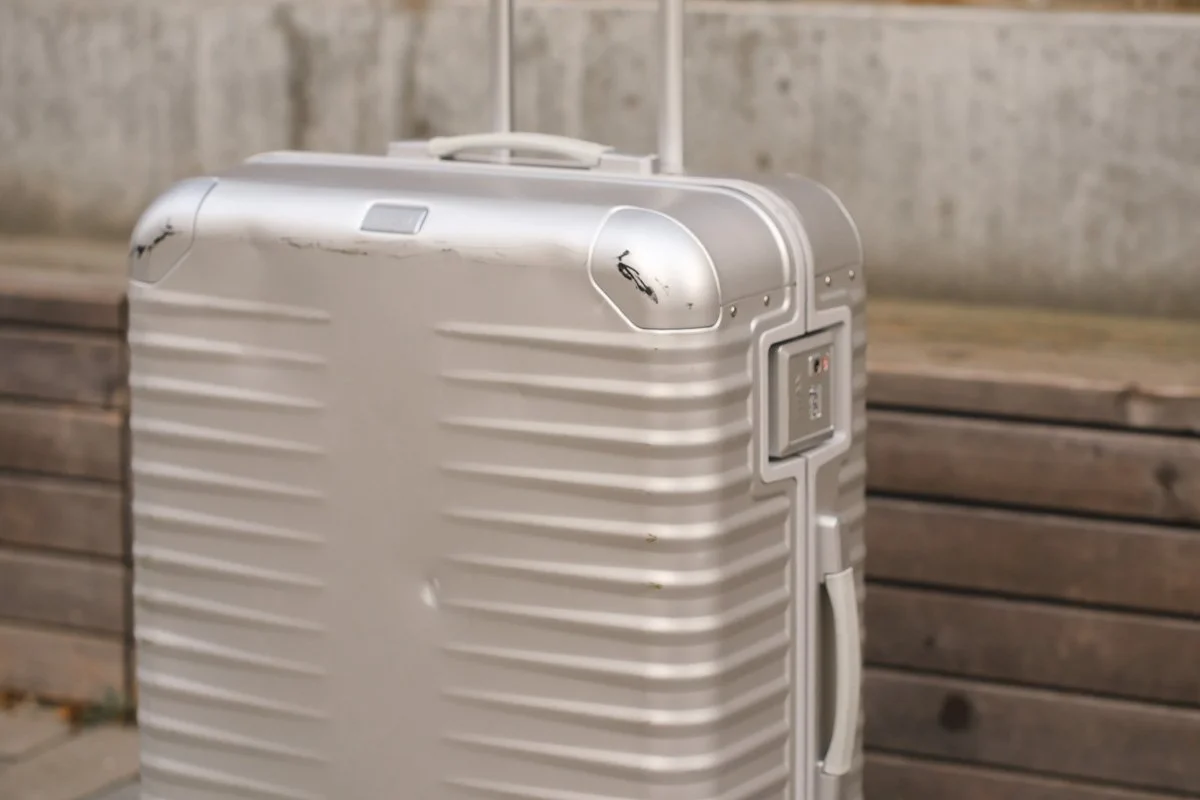
Visible scratches and dents on the aluminium shell
I got the suitcase at the end of November, and it has been on 8 flights since, and now it clearly shows that it’s been in use - there are plenty of visible scratches and dents, and the plastic and leather parts have gotten dirtier, so we could say it is building its own character now.
The only thing I’ve noticed getting a bit loose after these two months of use is the telescopic handle, but I think this is completely normal for all suitcases after some use. It is definitely not as stiff and firm as it was on day one. The same thing happened with my older polycarbonate version - it became a bit less firm, but then it didn’t get worse after that. I plan to write a follow-up this December on how it has held up after a year of use.
At the moment I don’t worry about any damage, and the suitcase comes with 10 years of warranty (in fact, all Titan suitcases come with a 10-year warranty). But I still wanted to check how the repair process works in case something happens. Because I couldn’t really find any info about it on the website I contacted their customer service. They replied that most of the components are screwed together instead of glued, which means they can be easily replaced if something is defective. It is not necessary to dispose of the entire suitcase. Many specialist retailers can repair products on site because they have spare parts available. If this is not possible, they will take care of repairing the products. The process is as follows: The customer contacts the specialist retailer or Titan directly, depending on where the product was purchased, and they determine the fault and whether the case is repaired or replaced. It is also important that the customer contacts the airline directly in the event of transport damage caused by airlines.
Based on that info, I think the best option is to buy their suitcases locally if possible, in case something goes wrong. The second-best option seems to be buying directly from Titan, because my guess is that it will be easier to handle the warranty directly with the manufacturer than with a third-party online seller.
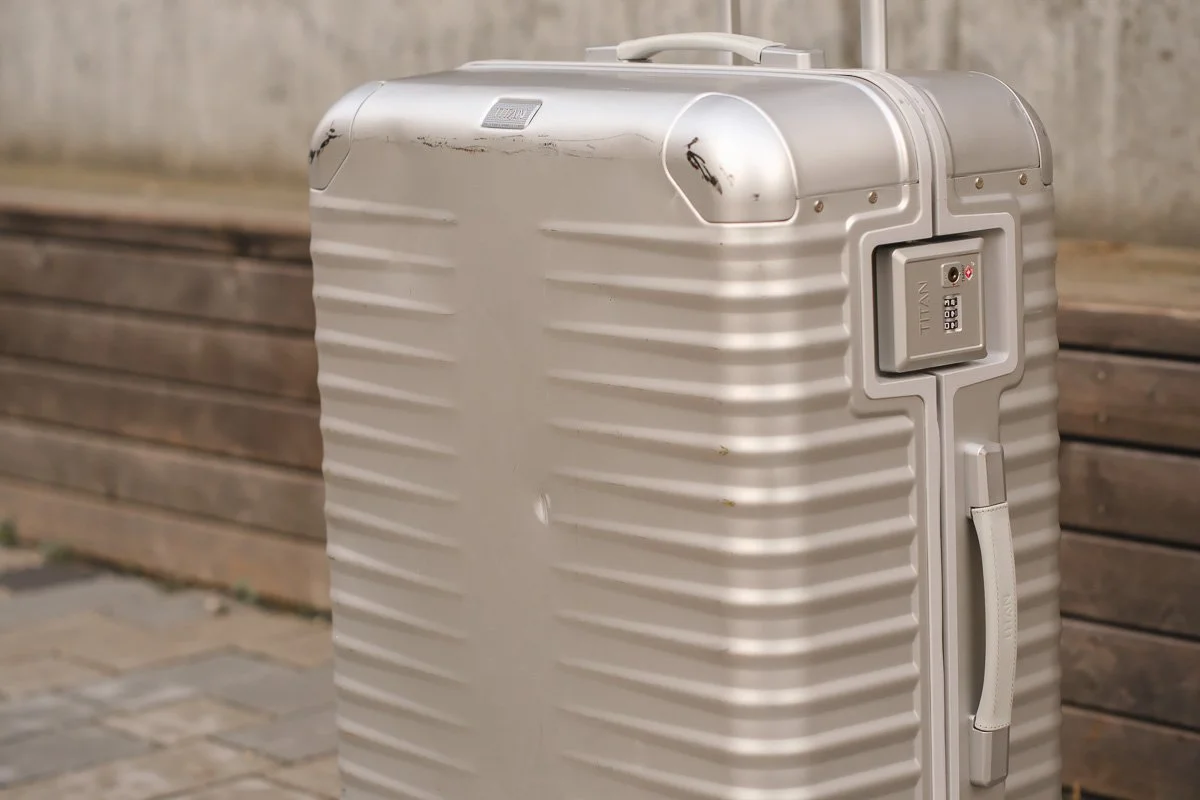
Another thing that I want to point out to everyone who doesn’t own an aluminium suitcase yet - these things are heavy! Compared to the polycarbonate version, this one is almost twice as heavy - 6.7kg, compared to 3.9kg for their Upgrade model in the same size. Also, 3 kg can be a lot of extra stuff you can pack if you have a weight limit, so this is something you should consider before buying.
Overall, I’m very happy with the suitcase - I love the clean design, it’s great quality and value, and it’s exactly what I was looking for in a suitcase: reliable, good-looking, and it rolls really well. I look forward to more trips with it, and I’m actually thinking about getting it in cabin size as well.
So if you are looking for a great value aluminium suitcase or a best Rimowa alternative, I believe this is a great option that I would gladly recommend.
related articles

I’ve been looking for a new aluminium suitcase for a while, and Titan’s Eternity is solid, rolls smoothly, made in Germany, and almost half the price of Rimowa. After a couple of months of use, here’s what I think about its quality, design, and value