
Finding the True Value: Quality vs. Price in Classic Menswear
I’ve been thinking about how to approach this topic for a few months now, and after checking out so many different brands at different price points last month at Pitti Uomo, I decided it’s time to share my thoughts.
I should start by saying that probably we all agree that most things that we associate with classic menswear today are luxury. Luxury in terms that we don’t really “need” any of it, because today we can go out and buy clothes for very cheap (what’s wrong with this is a topic for another time). I just wanted to illustrate that these well-crafted garments that we care so much about aren’t actually a necessity in our lives, even though I’m sure many would be willing to argue about that.
My newest beige flannel made-to-measure suit from Poszetka
When it comes to classic, traditionally crafted clothes, there are different price points, and the question that I often hear is: does a higher price always mean better quality? I think there is no right answer to this, it can be yes and no, because the answer is usually completely subjective, as it comes down to personal preferences - what matters most to the individual we are asking.
There are a few factors that define quality clothing: one is the quality of the fabric used, one is the construction, one is design and details, and one is who made it. All these factors will affect the performance and longevity of the garment. And one last thing that we should not forget is the way and how often you use the garment, and how you look after it and care for it. Fabric will affect the price, but most often it’s not the main reason why somebody will pick a specific garment. Most of the time, it’s the construction and design that weigh the most in that decision, but sometimes also who made the product - it can be about a specific or unique maker, but most often it’s about the origin of the product.
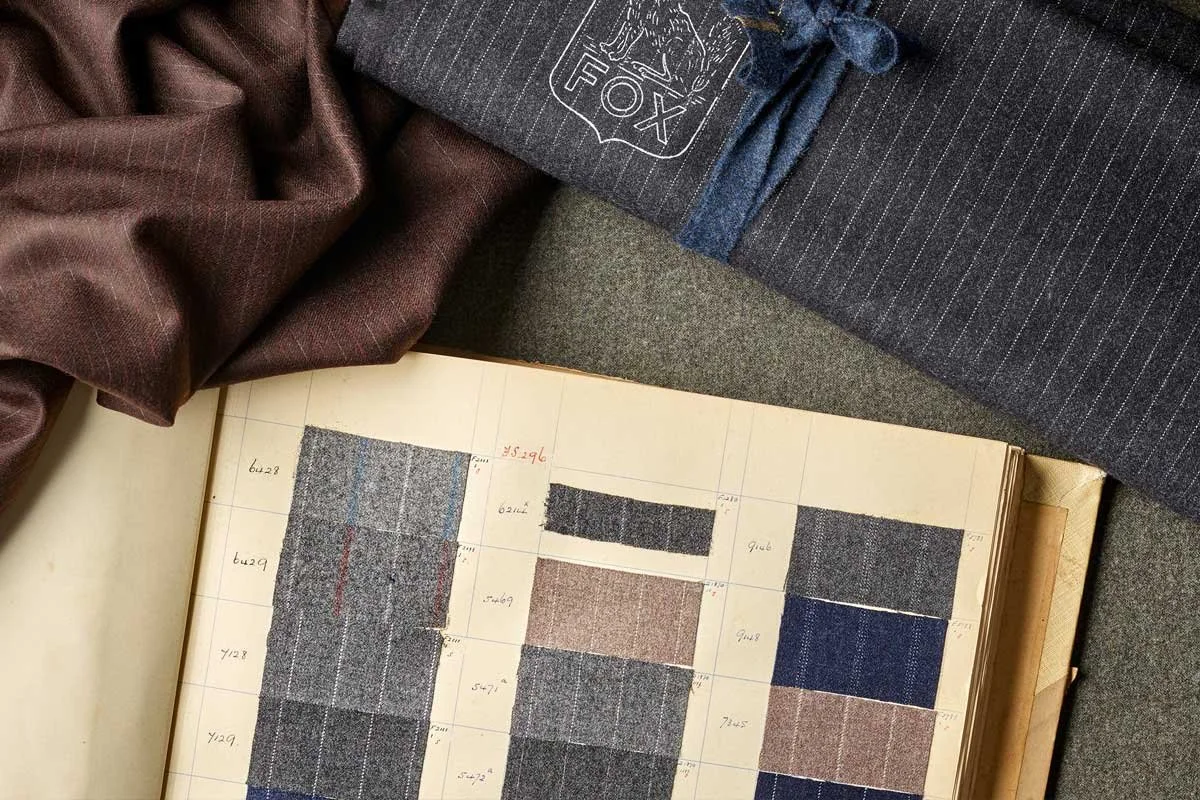
Fox Brothers make one of the finest fabrics in the world
So if we talk about construction, there are certain elements that affect durability and limit design options. For example, stitch density is a very clear and objective criterion that also affects the durability of a garment. And this is where this topic can go in two different ways - do you consider better quality something that is really well made by machine and will last longer, or the finest handmade craftsmanship?
Here you will probably get different answers from different people - some consider better quality to be a garment that will last longer, while others consider it to be the finest handcrafted product you can find. I can understand both perspectives, and I think both are totally fine as long as you have your own reason for choosing them. I, for example, don’t really see the need to have everything made with the details of the finest handwork. I appreciate it, but in some cases I honestly don’t really understand the point of it, other than “because why not?”
Whitefeather Mfg CO leather jackets are incredible quality and value for money
And here comes another question, or point - “better” vs “the best”. I think I don’t always have to have what’s the best, but that’s probably because I can’t afford to spend 10,000€ on a suit or a leather jacket if I can get a very nice one for five times less. That's just my personal opinion, which is totally subjective. I see no problem if you can pay 10,000€ for a suit if it makes you happy, even if you wear it only once a year. If it doesn’t hurt your bank account and brings you joy, that’s all that matters in the end, right? We only live once.
But for most of us who have to be a bit more rational with our money, I think we often search for what’s great value. And what’s great value is another thing that’s very hard to define, because it is again something that’s partly objective and partly subjective. It has more layers to it - for example, one might look at it as how much wear you get out of the product compared to the price (I consider this an objective measure, and it’s called cost per wear), or what quality you get at a certain price.
There are, of course, subjective parts of this equation - what if you don’t like the product that is best value, or at least better compared to one that is not as rational a choice? For example, I believe Carmina and Crockett & Jones shoes are some of the best values on the market in terms of quality for price, but when it comes to penny loafers, I personally prefer Alden (the shape and overall aesthetic), even though I don’t think they are good value (or even reasonable) at the current EU retail price.

Special edition of snuff suede Alden LHS Penny Loafers with original rubber sole, made exclusively for Alden Madison Avenue
This is just one example of when we try to be rational, but in the end our decision is based on personal preference, which is often not the most rational - which is expected, because, as I mentioned at the beginning of this article, most menswear purchases are luxury anyway (read: we don’t really need them).
So if I use shoes as an example, we can find traditionally crafted shoes starting at around 200€, and the prices of shoes can go way over 2,000€. Most people probably wonder if a higher price means better quality, or where the sweet spot is. The reality is, as I mentioned above, for most people this answer is totally subjective. But looking objectively, when we consider materials and construction, in terms of quality there is one point that you can’t surpass - “the peak”. We can say this is top quality, and then it stops. Everything that goes beyond this point can be considered unnecessary for most, but makes a difference for many - like all handmade stitching and details, and also exotic materials, etc.
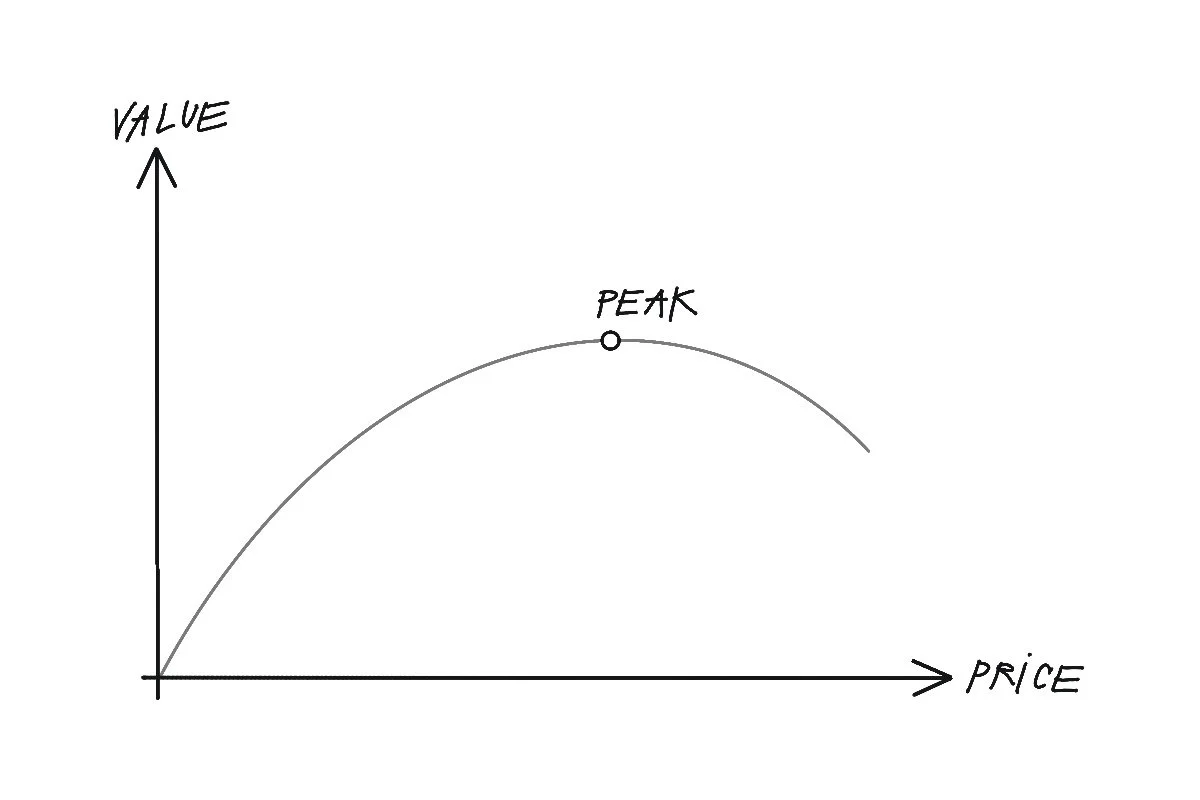
Graphic of “the peak” in terms of value vs price / ©Outfit Narrative
If you are only looking for the best quality, I think we can actually make an objective drawing of value vs. quality. It goes like this - you have to reach a certain price to get solid quality craftsmanship. If you want to go below that price, you often have to cut corners in the quality of materials or construction, etc. This means there is a starting price point if you want to get acceptable or decent quality. Then, if you are willing to pay more, you can get better quality, but only up to a certain point - “the peak.” When you cross that point, you are paying extra for other things, like extra handmade details, more luxurious materials, or sometimes even the name of the brand.
We could use this graph for basically every type of clothing or accessory; we would just need to change the numbers. I can give another example with shirts - I believe Poszetka and Kamakura are probably the best value shirts (quality for price) you can buy right now (they are “the peak” in the shirts category), but whether they are really the best value is something you will have to decide for yourself.
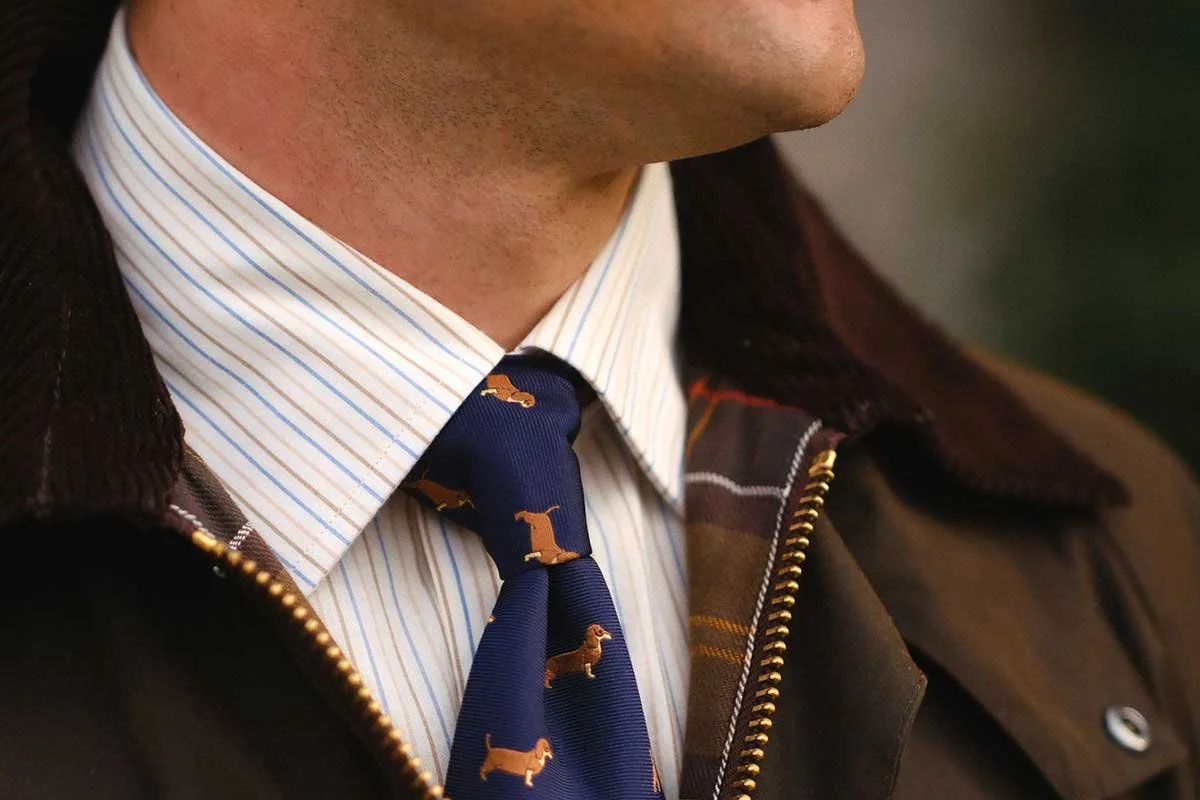
Poszetka shirt
Sometimes we hear someone say, “But this is good enough.” When it comes to material objects, I wouldn't call it good enough, but rather the best value for the intended use. For example, for someone, a shoe that costs 1,000€ can be a better value than a shoe for 200€, if they will wear it regularly and it will last a long time, compared to a 200€ shoe that will be worn just once a year. So I think “good value” (or “best value”) is a more fitting term than “good enough,” because “good enough” has a negative connotation and sounds like something you didn’t really want, but that will do the job because you had to make a compromise.
I believe we can objectively measure what might be the best value for price, but what is the best value or quality is completely personal and based on individual preferences and needs. At the end of the day, the most important thing is that if you can afford it, and the item you are buying brings you joy, then that’s all that matters. But if sometimes you have to make a compromise, then you should consider some of the factors mentioned in this article.
I look forward to hearing your thoughts on this topic.
related articles
Getting dressed when it’s pouring outside can be unnecessary stressful. In this guide, I share what I usually wear on rainy days - from mac coats and waxed jackets to dark trousers and the right shoes, so you can stay comfortable, avoid water damage, and still look well put together.